YouTube Video Link: https://youtu.be/dUyZu01jh0I
Is there a type of jigsaw puzzle you’ve never heard of but might be really into?
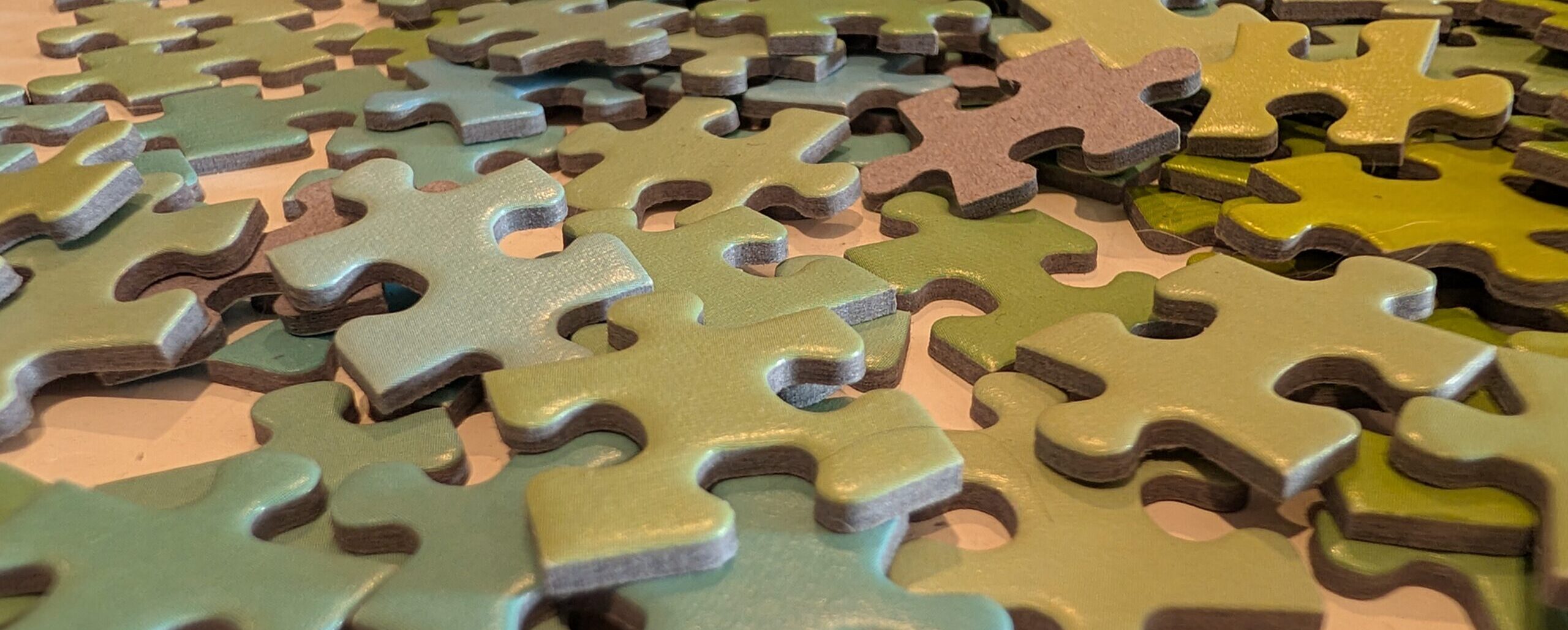
This episode Scot talks all about his love for and fascination with gradient jigsaw puzzles, a thing new to many people. He
goes into his love of puzzling, and where it probably originated, as well as connecting with other puzzlers through Assemble Puzzlery and their events.

Scot searches for another puzzler who will have the same experience with gradient puzzles that he had, and manages to stir up a little drama with inadvertently picking the worst gradient puzzles there are at a crucial point.
So grab a puzzle, pour yourself a drink, and sit back for a story told, piece by piece.
Assemble Puzzlery: AssemblePuzzlery.com
Thank you to Jen Thompson, Erica Elms, Vicki Davis, Brian Earle, Sarah Busing, Norah Molina, Vera, Stephanie, Ben Reburn, Peggy Lervold, Lois Lervold, and Amelia Maupin for helping me with this quest.
Chapter Timestamps:
00:00 Pre-Introduction
00:27 Introduction
00:58 History with Puzzles
02:54 First Gradient Puzzle
06:35 My Wrong Prediction
11:15 The Episode Quest
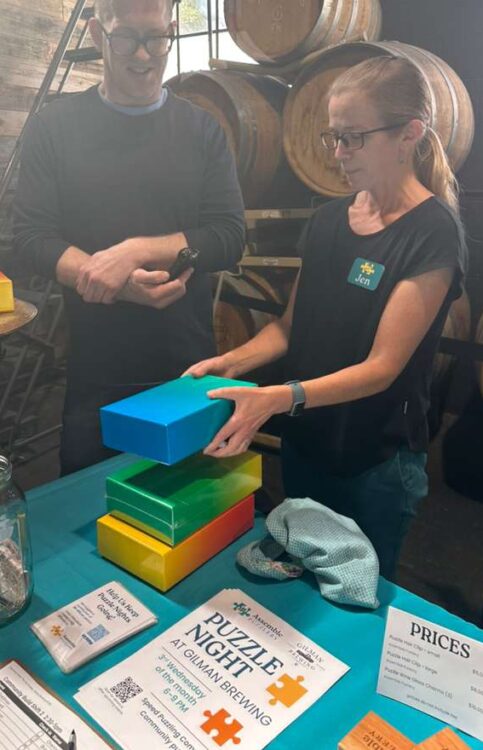
12:55 Jen and Erica
18:19 Assemble Puzzlery Event
19:57 Sarah
22:02 Brian
24:57 Who is Karen Puzzles?
30:35 My Big Mistake
35:24 Brian – Blue Kazoo
37:52 Vicki – Ravensburger Krypt
40:48 Vicki – MasterPieces
46:36 Puzzling All Summer Long
54:38 Lois and Peggy – Kansas
1:02:26 Sandra Maupin Tribute
1:03:25 Perfectorium Entry
1:04:08 Pictures
1:05:20 Thank Yous
1:06:20 Solutions From the Multiverse
1:07:40 Ending
Music from this episode by:
Shawn Korkie – https://www.fiverr.com/shawnkorkie
Aandy Valentine – https://www.fiverr.com/aandyvalentine
Yaroslav – https://www.fiverr.com/nearbysound
Mimmi Bangoura – Placebo (Instrumental Version)
Mimmi Bangoura – Meant to Be (Instrumental Version)
Timothy Infinite – Grapefruit
Marc Torch – Cradle Hymn
Rebecca Mardal – Carefree Morning
Frook – Danska Fall
Vicki Vox – Some Kind of Friend (Instrumental Version)
DAJANA – Trauma Bonding (Instrumental Version)
Mike Post – Dun Dun
GRADIENT PUZZLE COLLECTION INVENTORY:
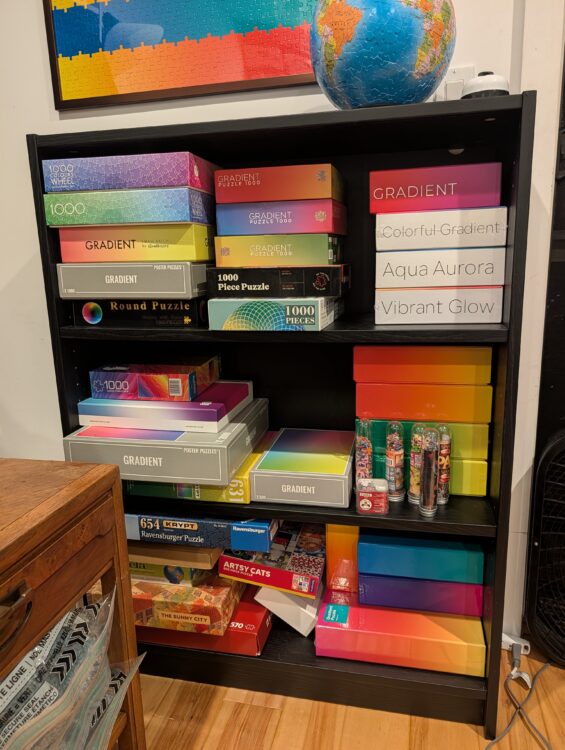
So here’s the promised overview of the different gradient puzzles I own and are in my collection. There are a couple of notable ones that I haven’t acquired, but I’ve done all of these and here are my comments:
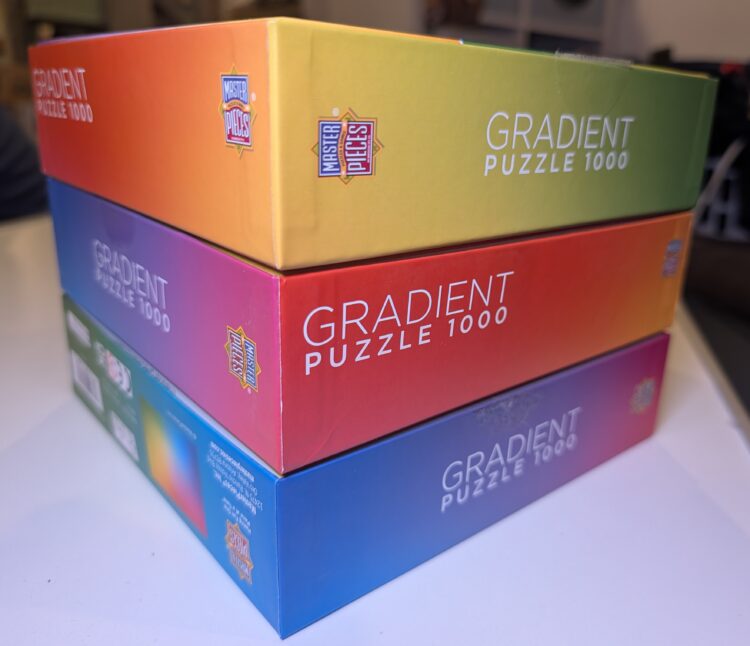
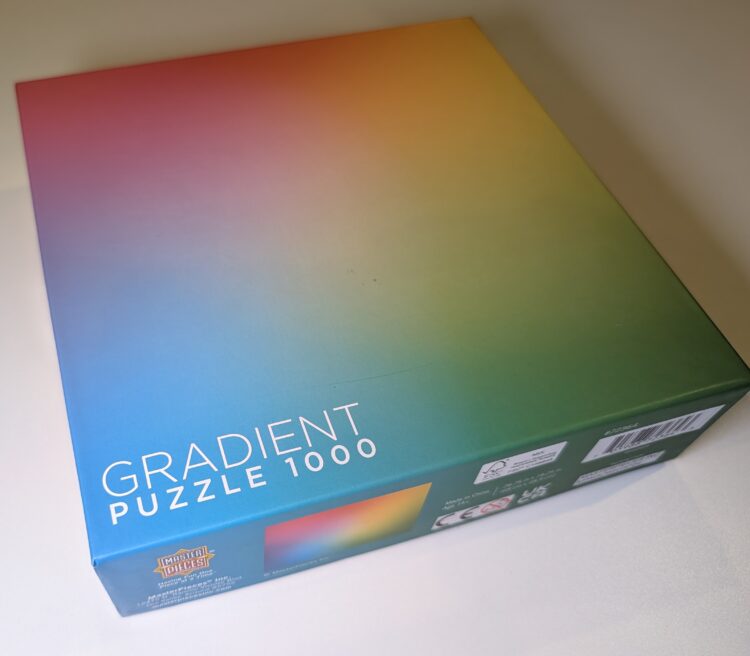 Top Pick – MasterPieces Gradient Puzzle – 1000 Pieces (x3)
This puzzle wins the award for being the most easily accessible, and reasonably priced ($16.99 at time of press) to get new. They also work well with you if you wind up missing a piece. That would be reason enough to love it but it also has a really fun and interesting piece-cut that makes it a really fun and unique experience among the collection. I wish the pieces were maybe a little more glossy and the colors a little more vibrant but this is an excellent puzzle, and my top pick if I had to recommend one to someone today.
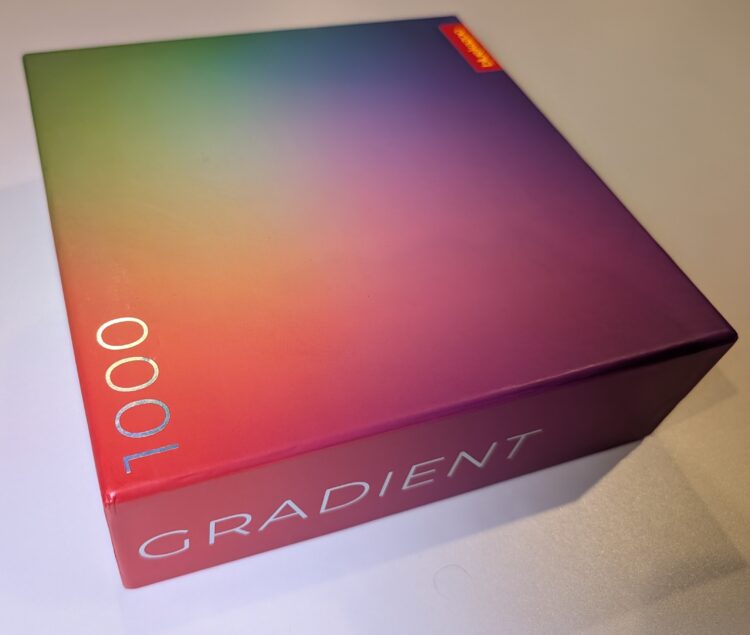
Top Pick – BlueKazoo Gradient Puzzle – 1000 Pieces
This puzzle is my other top pick which has a great piece selection, runs the typical grid and piece cut but in a very pleasing quality. The company has disappeared so it’s hard to find or get these puzzles, but if you find one out in the wild it is the other best puzzle experience I had in this process and the other top recommendation I would make.
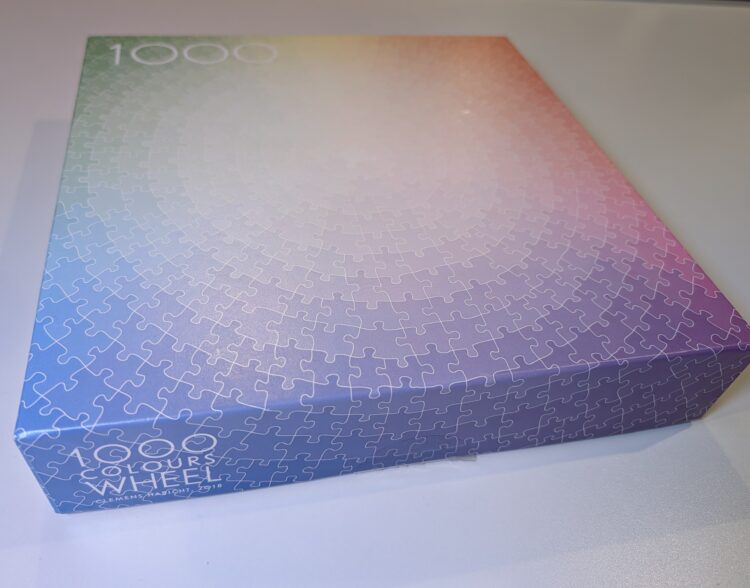
The Play Group – 1000 Colours Wheel – 1000 Pieces (x2)
A gradient puzzle with a few differences. This one is in a circle pattern, and instead of printing the gradient across all the pieces, each piece is printed in one flat color, and they form a gradient when assembled with each other. The Play Group was also wonderful when this puzzle was missing one piece, and sent me a replacement with no issues. The piece quality is very high and it goes together in a very satisfying build.
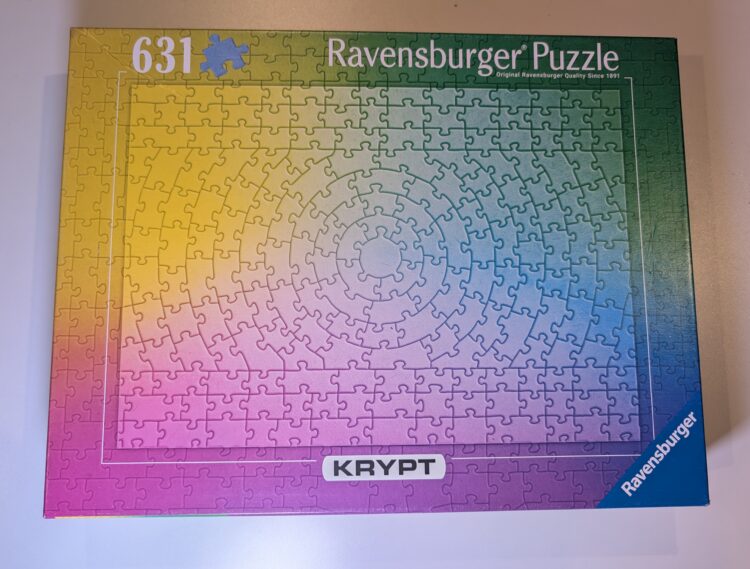
Ravensburger Krypt Cut Full Gradient Puzzle – 631 Pieces
This puzzle has such a different cut that the build process is very quick by comparasson to other puzzles. The circles inside rectangles inside circles in a rectangle works well to hold interest throughout the puzzle and it’s very satisfying to complete. I do wish the colors were more vibrant and I think there was a lot of room to dial up the saturation but a really pleasisng experience for sure.
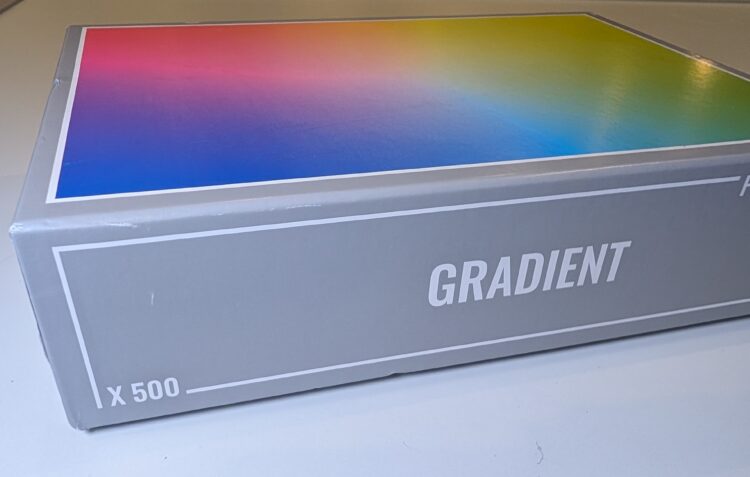
Cloudberries Gradient – 500 piece Gradient
I bought this one the most recently to complete the Cloudberries offerings, but ejected from my first build of it when I discovered that the pieces were all the standard (dogbone) puzzle piece shape and the process of building it would require a bit more brute force puzzling than I was looking for, especially from a 500 piece puzzle.
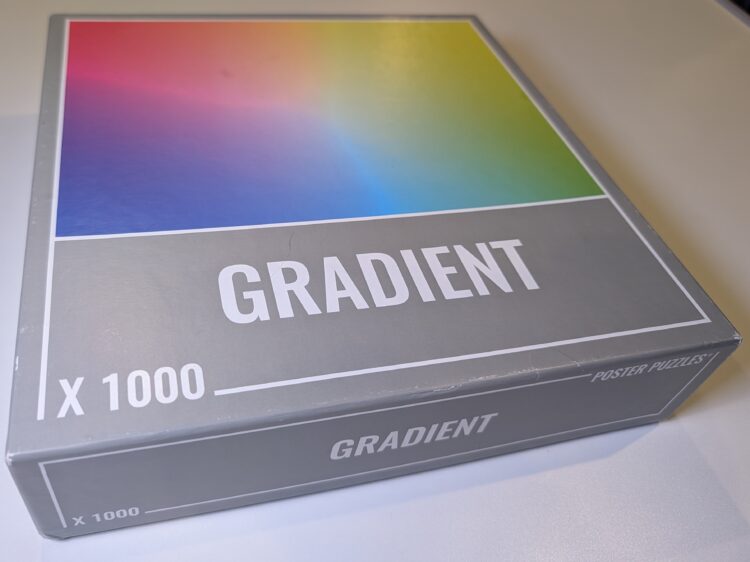
Cloudberries Gradient – 1000 piece Gradient
This was the first gradient puzzle I ever bought and it will always hold a special spot in my collection for that reason. It’s also a solid build experience, with good piece quality and the color changes enough to not get stuck and make it flow really well. If this had been a bad experience I probably wouldn’t have ever tried another but because I liked it so much this whole collection grew out as a result.
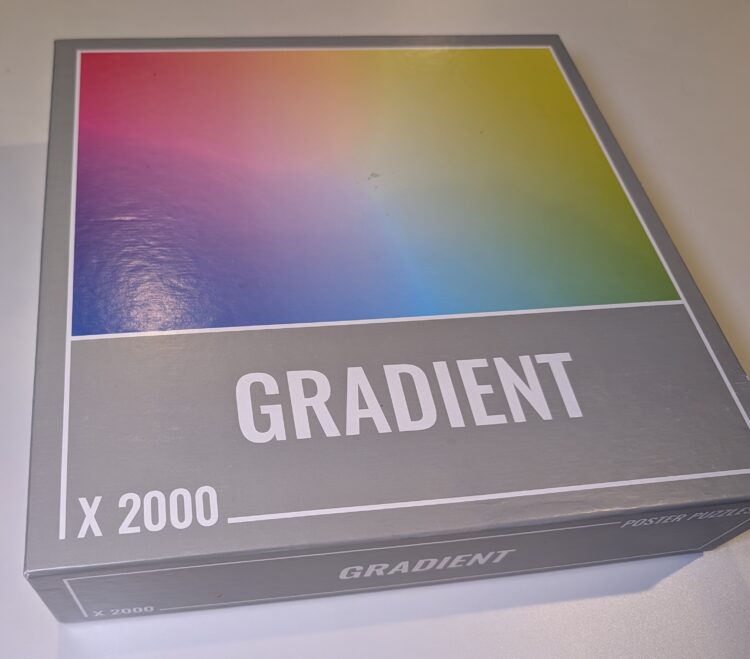
Cloudberries Gradient – 2000 piece Gradient
This is the largest puzzle in my collection, and it is a nice build, making it much bigger than other puzzles so it doesn’t fit on my puzzle board completely. I think at this size, however, the gradient becomes more difficult as there is less variance between pieces and therefore more mixups on what the next piece needed will be. It is not by any means unpleasant, it just lacks some of the speed that bring the others up to a higher level for me, and the size prevents me from getting into flow state as much or as often, I think.
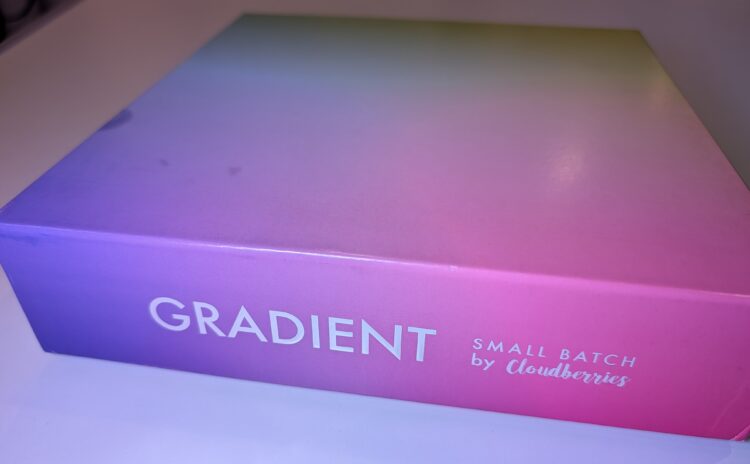
Cloudberries Small Batch – Gradient v2 – 1000 Pieces
This is also made by Cloudberries so the piece quality is tremendous, but it has a much more interesting piece cut with a wide variety of sizes and shapes within the 1000 pieces.
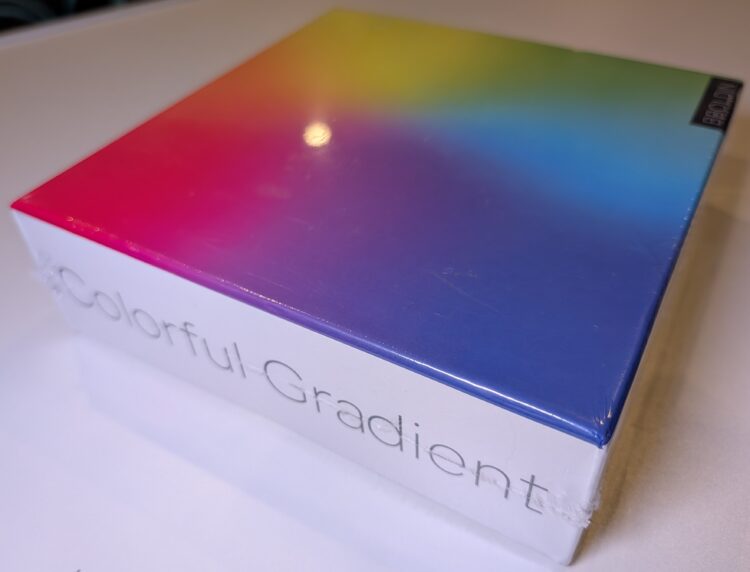
BBoldin – Colorful Gradient Puzzle – Z-491 – 1000 Pieces
This is the most reasonably priced whenever I have looked, but it also is only a mediocre build experience, with pieces that feel more plasticy and thinner, as well as letters printed on the back to let you put together the pieces in a different way if you get stuck. It’s nice and enjoyable but lacks some of the higher quality aspects of the puzzles above it on this list.
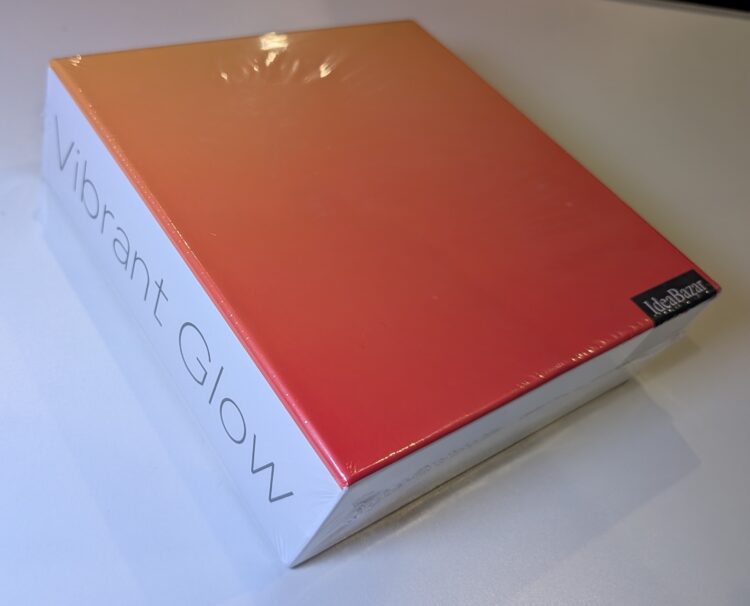
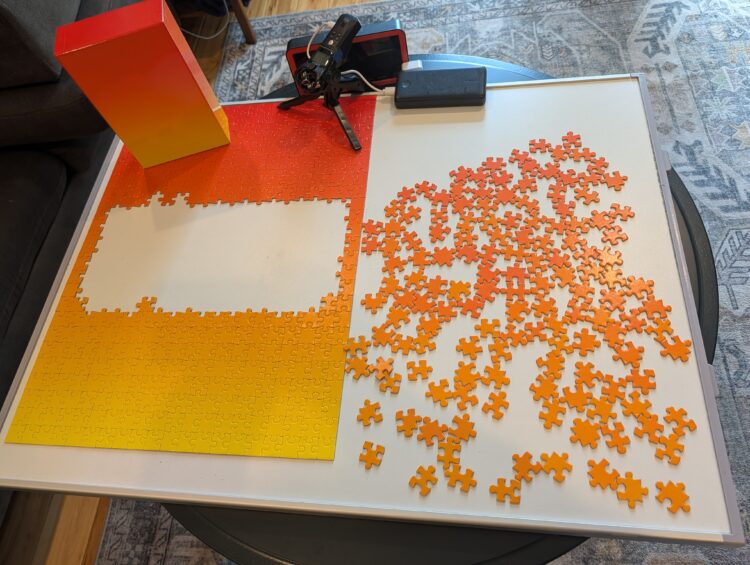
IdeaBazar – Vibrant Glow (Orange – Linear) – Z-334 – 1000 Pieces
This appears to be made by the same company as the BBoldin Colorful Gradient Puzzle, and the boxes and branding match identically. This one is a linear gradient of only a light yellow-orange to a more reddish-orange. It takes a little more nuance but I enjoy the build process. The pieces are the same quality and variety as the BBoldin puzzle above.
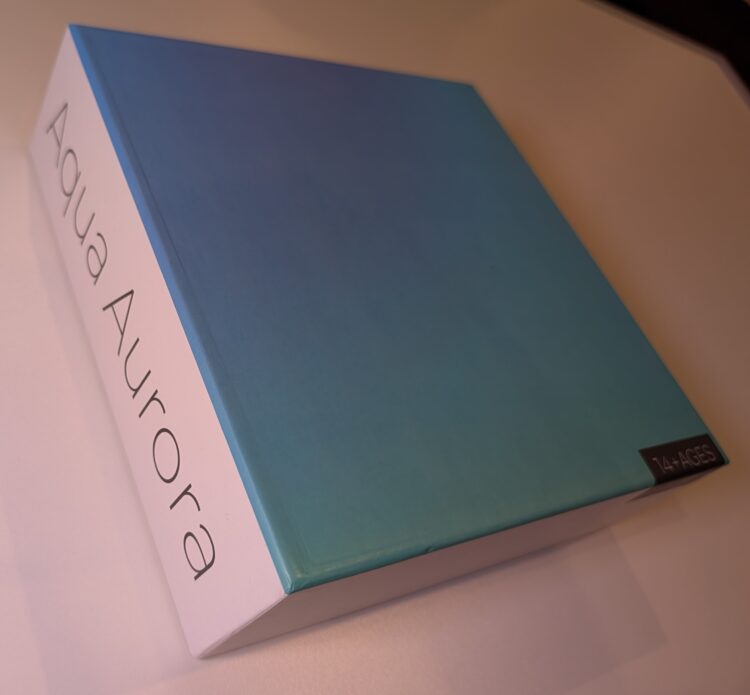
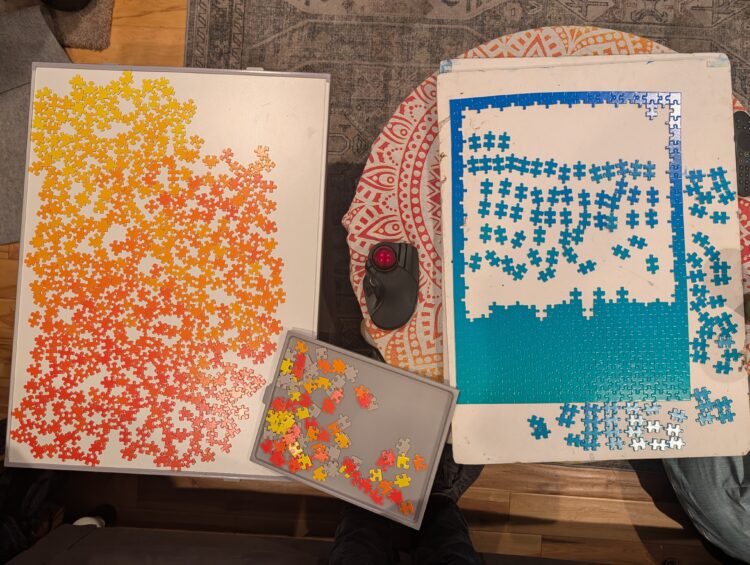
BBoldin/IdeaBazar – Aqua Aurora (Blue – Linear) – Z-268 – 1000 Pieces
This also appears to be made by the same company as the BBoldin Colorful Gradient Puzzle and the IdeaBazar Vibrant Glow Puzzle, and the boxes and branding match identically. This one is a linear gradient of only a light blue to a more dark blue. It takes a little more nuance but I enjoy the build process. The pieces are the same quality and variety as the BBoldin puzzle above.
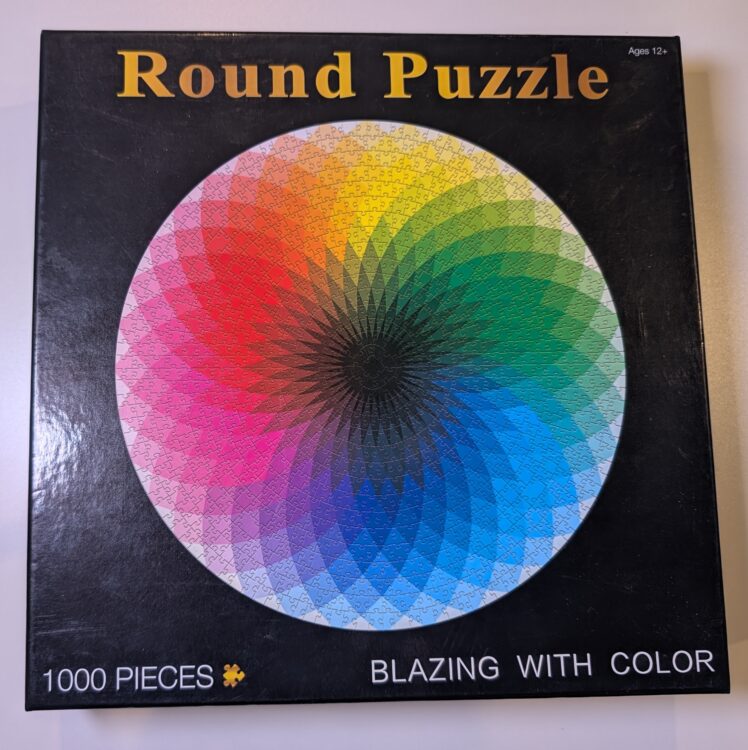
Round Puzzle – Dark Center – Black Box – 1000 Pieces
My daughter enjoys a round puzzle and this is the only one I have where the colors are additive, and build to black in the center, not white. The shapes make it sort of borderline on calling it a true gradient, but I think it shares enough qualities with them in the build process that it gets to be included. Great build, good pieces, and fun to build a circle for a change.
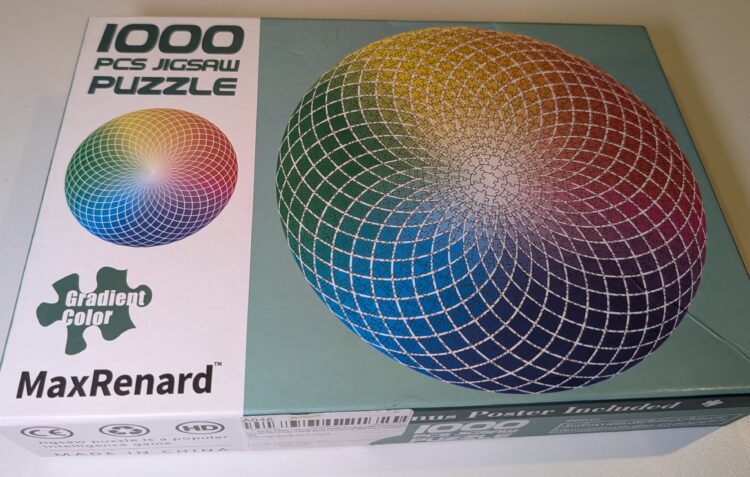
MaxRenard – Gradient Color – 1000 Piece Puzzle (Round)
This is the same cut as the Round Puzzle with the Dark Center above, but it has white lines between the sections, and the colors are subtractive so they work to white in the center, not black. The white lines also land this in iffy land on the gradient label, but it shares enough qualities with the puzzle above that I think it gets in. The white lines do make for a less pleasing build, though.
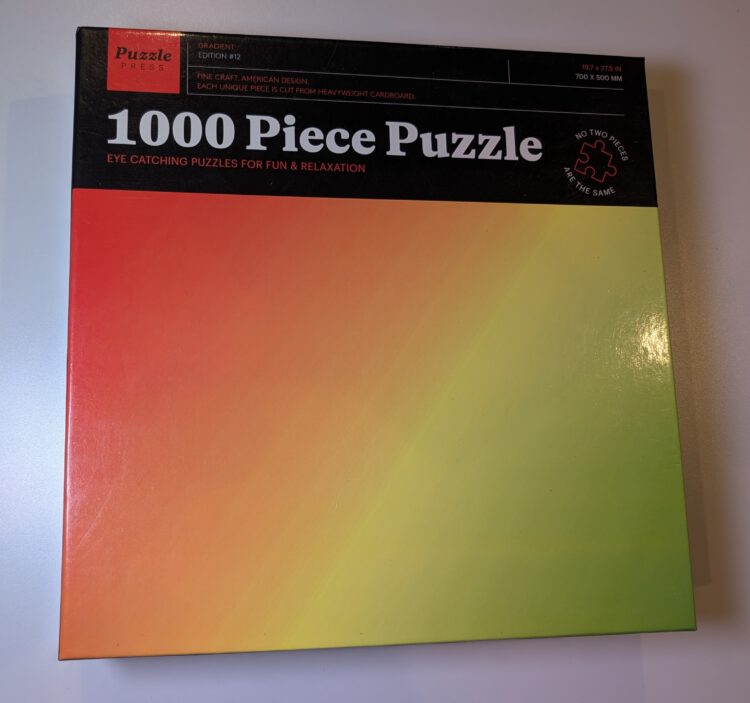
Puzzle Press – Gradient Edition #12 (Green to Orange Linear Gradient) – 1000 Piece Puzzle
This was the second gradient puzzle I bought and the first linear gradient. It was nice that the line was on a diagonal and it helped me with the build. It is a decent build, but the colors are not the best match for staring into hours on end, and the gradient sometimes doesn’t transition slowly and you can see the lines between the sections where the printing wasn’t nuanced enough.
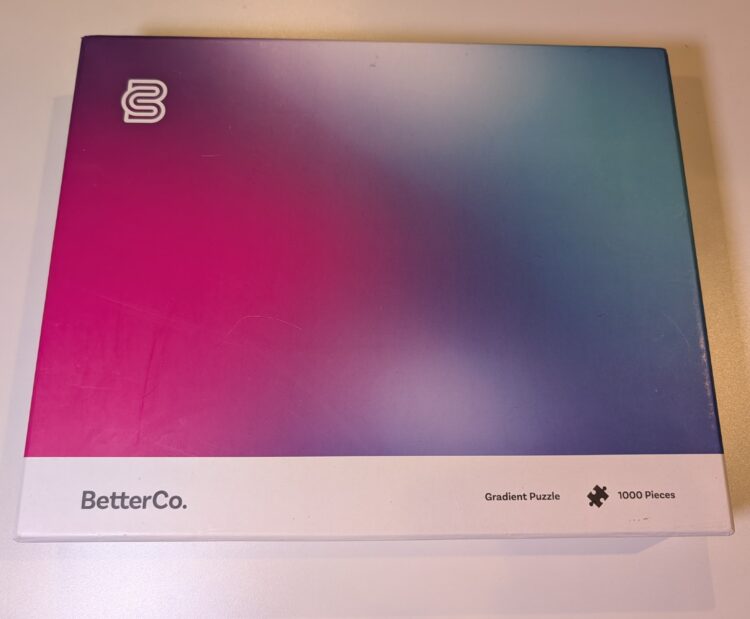
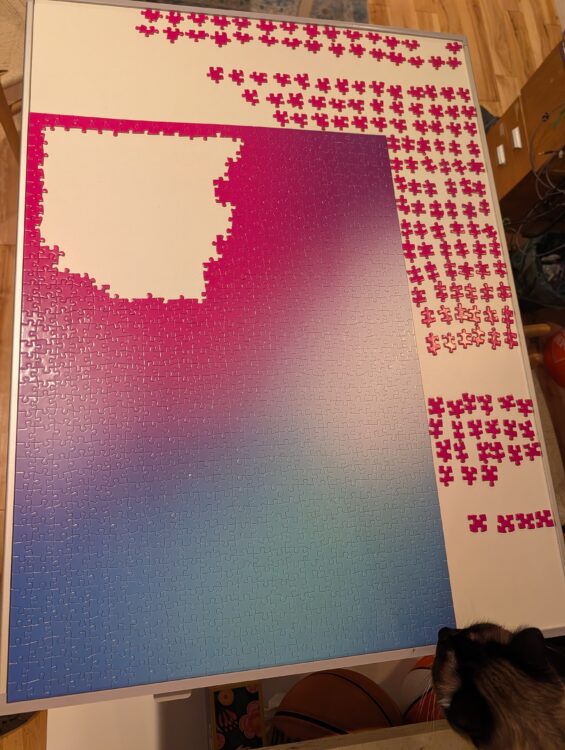 BetterCo. – Gradient Puzzle (Pink and Blue) – 1000 Pieces
This is a linear gradient that goes between pink and blue with white mixed in, but it’s not a straight line. The line waves across the image which makes it interesting visually, but more difficult to build. I found myself getting stuck in the pink sections of this puzzle and having to resort to brute forcing the most saturated of the pink and blue sections.
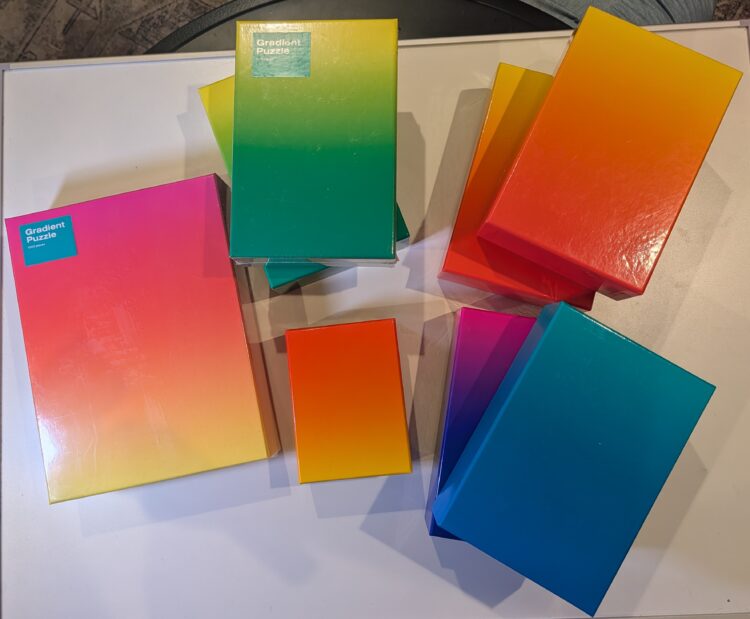 Areaware Linear Gradient Puzzles:
Gradient Puzzles designed by Bryce Wilner
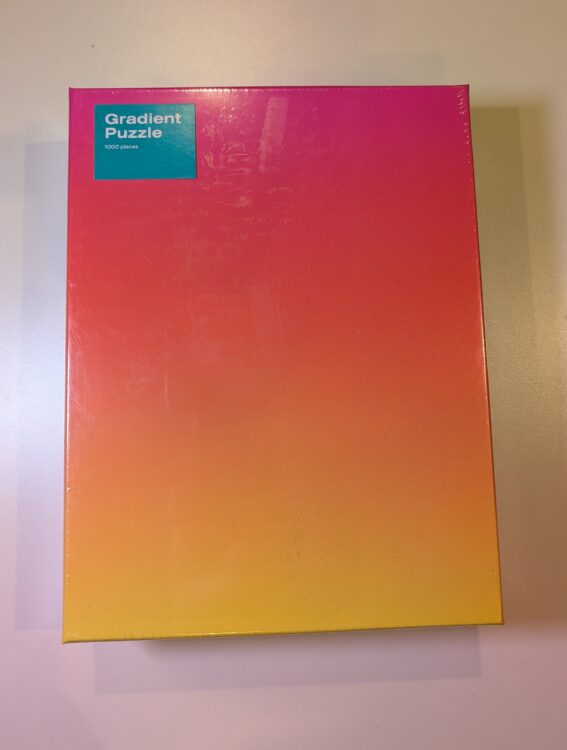
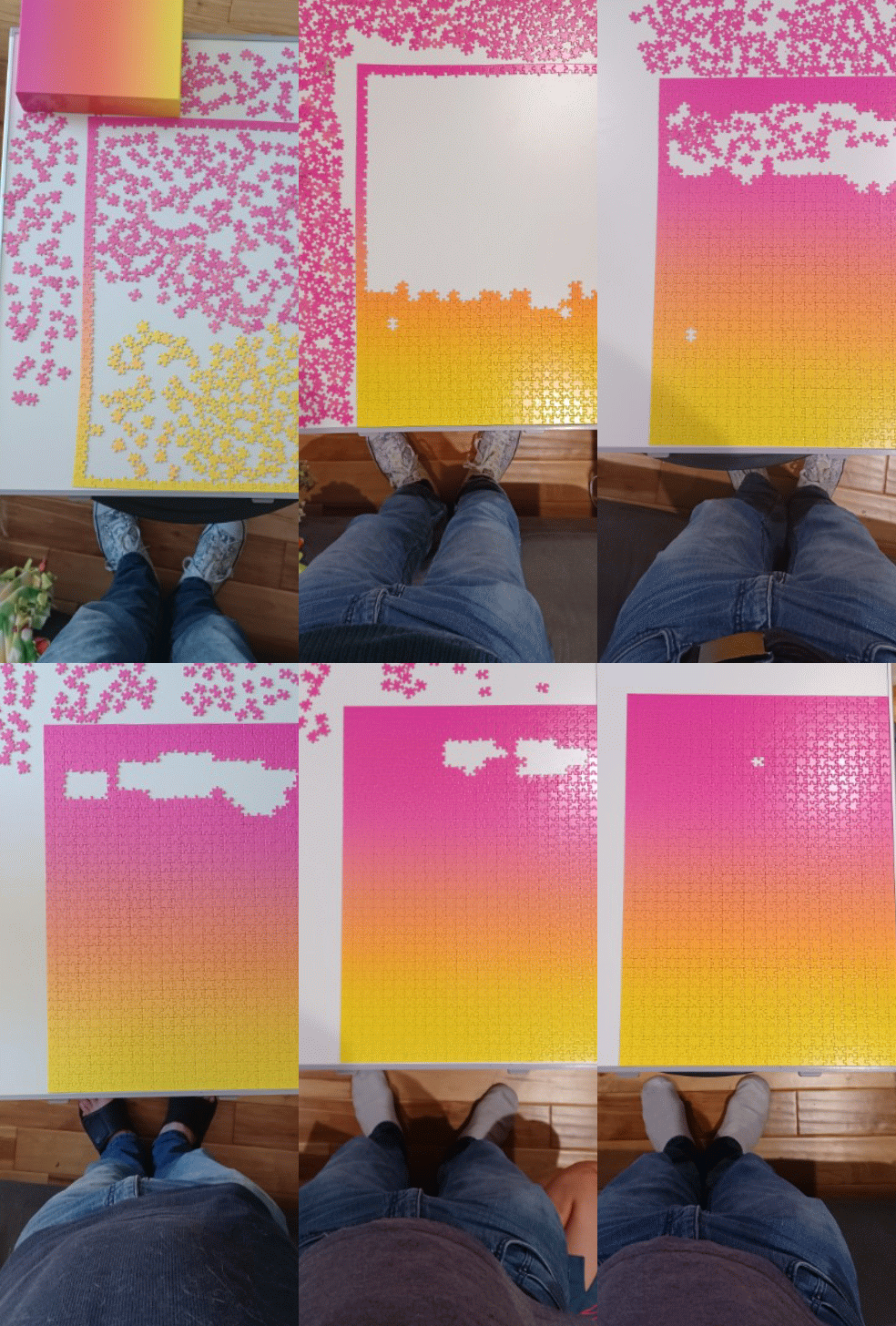
Pink to Yellow – 1000 Pieces
I got this before any of the 500 piece Areaware puzzles, and I liked the build a lot. I found the colors to be widely spaced out enough that I could complete most of it pretty handily. The pink section again becomes the most difficult for my eyes, but I managed to finish the build and count it as one of the puzzles in my collection that I like better than average.
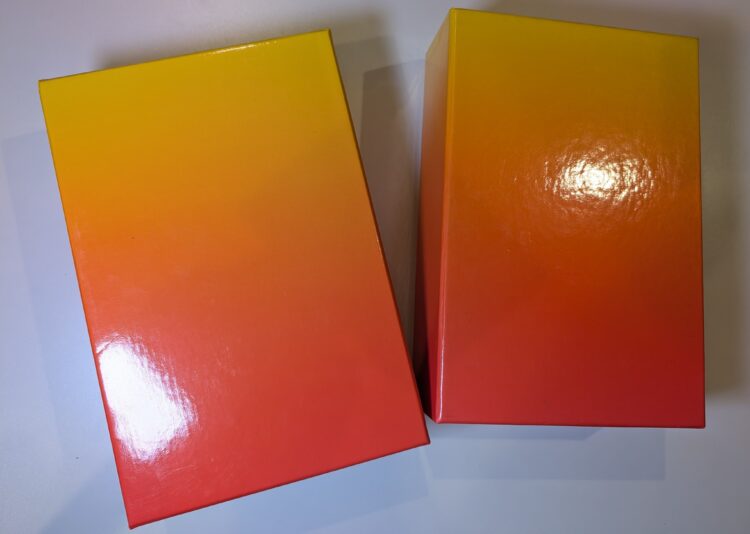 Yellow to Orange – 500 Pieces (x2)
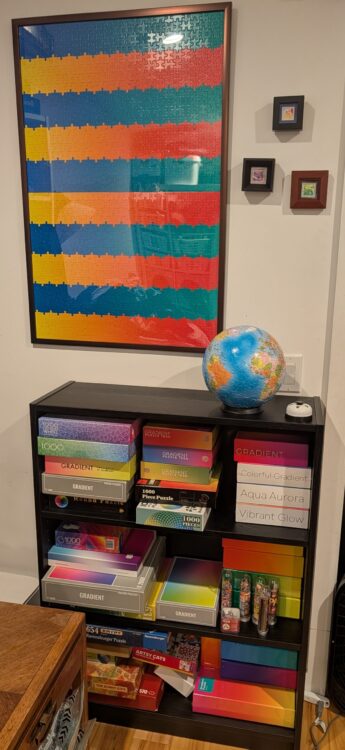
This puzzle I have 2 copies of, and the weird thing is that one has the full variety of piece shapes – the 6 main shapes, but the other one has no variety and is all the standard piece shape that I call the dogbone. It is okay, but there is a VAST difference between the two builds between these two puzzles that they really are hard to lump together. I built the worst of the two into the puzzle I remixed with another color version and framed. It is now hanging above my puzzle shelf.
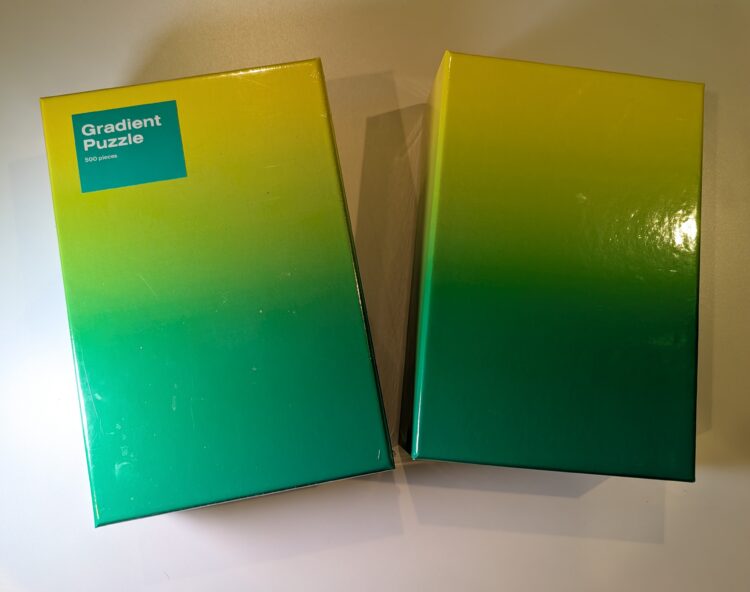 Yellow to Green – 500 Pieces (x2)
This puzzle I also have 2 copies of, and I have opened and built one with my daughter. The other remains sealed in plastic.
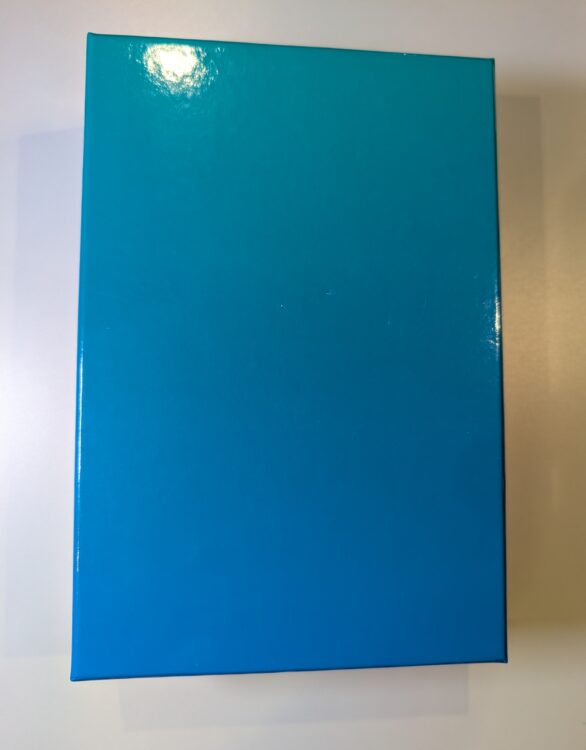
Teal to Blue – 500 Pieces
This is the other puzzle with the piece cut that is all standard pieces (dogbone) with no variety, making it really hard to complete, and it became the second one to remix with the yellow/orange puzzle in the frame hanging above my shelf.
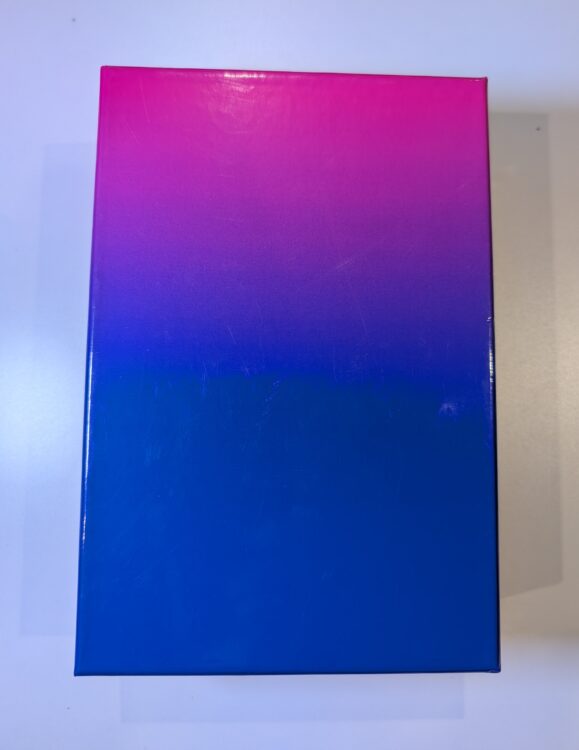
Pink to Purple – 500 Pieces
Another color version of the 500 piece puzzles that have many issues preventing them from being easy or enjoyable builds. This one especially has the pink section which is hard for my eyes and a large section of dark blue that looks solid and the gradient is next to impossible to distinguish.
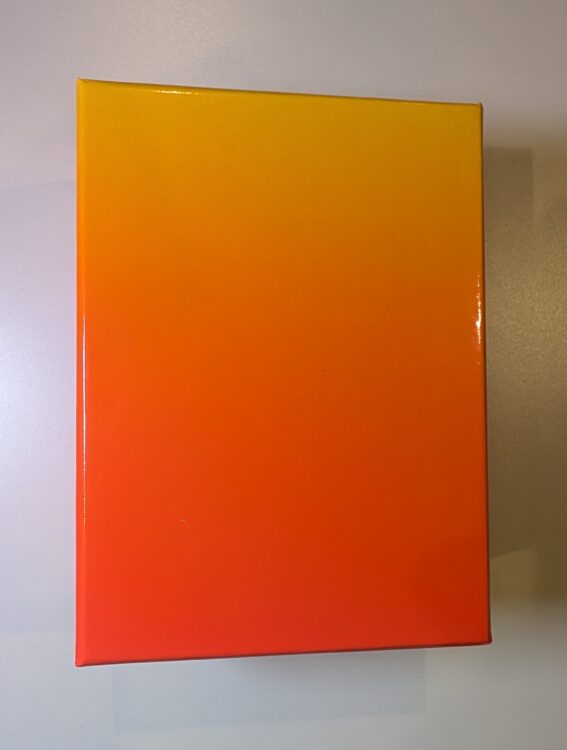
Yellow to Orange – 100 Pieces
I thought it also might be nice to have a 100 piece puzzle for people who thought the 500 piece challenge was too daunting. It is very easy, though, with my daughter able to build it start to finish in well under 10 minutes.

TPS023 GRADIENT PUZZLE SUMMER – SCRIPT
Little note here at the top – this is an audio only podcast, so it might make a nice pairing for when you are doing something with your hands and need to listen to something for long stretches of time. You know, if there’s any activity like that that comes to mind right now.
There will be a video version of this episode on YouTube which will be this audio paired with time lapse video of me putting together one of the puzzles this episode is about. Okay. Here we go.
YouTube Video Link: https://youtu.be/dUyZu01jh0I
[SHAKING PUZZLE IN A BOX SOUNDS]
[Opening the plastic wrap sound]
Alright, well let me just take this plastic wrap off so I can open up the box and get the episode out for you.
[Opening the box sound]
 Alright, well let me just take this plastic wrap off so I can open up the episode for you.
Hi, and welcome to The Perfect Show. I’m your host, Scot Maupin. I’m what you might call a perfection prospector, sifting through life looking for little things or experiences that could be considered ‘perfect.’ Join me each episode as I examine one topic that I’m presenting as a little nugget of perfection.
[PUZZLE SOUNDS, SHAKING, PIECES FALLING TO TABLE, ETC RUNNING UNDER THE FOLLOWING NARRATION]
I grew up doing jigsaw puzzles regularly, or rather I grew up with a mom who was doing puzzles regularly, and then got into it through her. It was not uncommon to see a jigsaw puzzle at our house out on a table, mid-progress. My mom was always working on a puzzle. Often on a flat wooden board so that it could easily be moved from place to place. Sometimes when watching movies as a family, especially if it was a holiday movie we saw every year, we’d have a puzzle out and all whittle away at it in front of the TV.
And I liked doing puzzles enough, I’d say. Not so much that I’d really do them on my own. But if I went to visit my parents, one would be out it’d be great to sit and catch up with everyone over it.
Now the way I would start a puzzle, I’m sure many people did the same, but put the edges together first of course, and then I liked to find something identifiable on a piece, then scrutinize the picture on the box until I locate it exactly, like the Terminator. If I can, I’ll place it directly in its spot. I’ll join it to the rest of the puzzle if there was a way to, sure, but if not then I’ll place it where it will go. The point is to be exact. Not to try it here and there until I found the right spot.
If it can connect, I lock it in place, and then I can’t totally explain this ritual, but I often give it two gentle taps after for good measure – maybe my hand is subconsciously celebrating my success [PLAY TWO TAPS SOUN D]– and then I continue this process, making slow but steady progress on the puzzle as a whole.
This hunt-and-find process satisfied something in my brain, but it also was extremely tedious, so I’d go for stretches, then tap out and take long breaks. Like a sprinter, making only short, exhausting bursts of progress.
And I had assumed that was just how I did all puzzles, and how all puzzles were done, which it was for most of my life.
But in the last few years I’ve adopted a new process. A totally different method, really.
A different puzzling method for a different type of puzzle I discovered that I hadn’t ever tried before.
[MUSIC SPACE?]
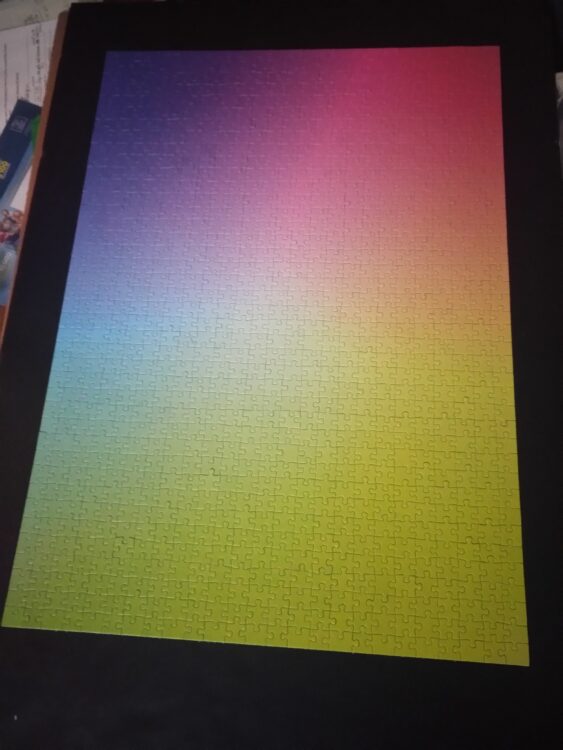
A color gradient puzzle. No lines, no shapes, no “picture.” Just colors becoming other colors, bit by bit.
Some are just 2 colors, and they transition in a straight line across the puzzle, like green to blue, or even three colors, but still in that line, like yellow to orange to pink; I call these ‘linear gradients.’
The other main type of gradient puzzle I’ve encountered include the whole color spectrum I call these ‘full gradient’ or sometimes ‘rainbow gradient’ puzzles.
I first found them back in May of 2021 when I was going more than a little stir crazy being inside so much during Covid. We had a few jigsaws, mostly collected from Goodwill stores for a few bucks, but I remember that being a time of just being slightly sick of anything that had committed the unforgivable crime of already being around me, and an urge to torture myself with the most impossible puzzle I could find.
Some people actually want the hardest puzzle possible. There are puzzlemakers who specialize in those, where all the pieces are the same shape or the puzzle is just one solid color or a puzzle that has the same image on front and back, just rotated 90 degrees. There’s all manner of impossible puzzle ideas down that path, but I don’t tend to like ones that even land anywhere on the wrong side of the line where my frustration outweighs my satisfaction, and I’m not entirely sure what made me want one here.
But the search led to my first gradient puzzle, and I was intrigued. I had never tried a puzzle like this, and it seemed like a good challenge. One with none of my usual comforts. One that should take me a really long time. I thought it might even turn out be impossible for me, but it would at least eat up some free time, a thing which everyone was flush with at that point in the pandemic, and it also just seemed like a funny thing to own. Like most puzzles are beautiful photographs of fields of wildflowers. This one would just be – colors? I find that very funny for some reason.
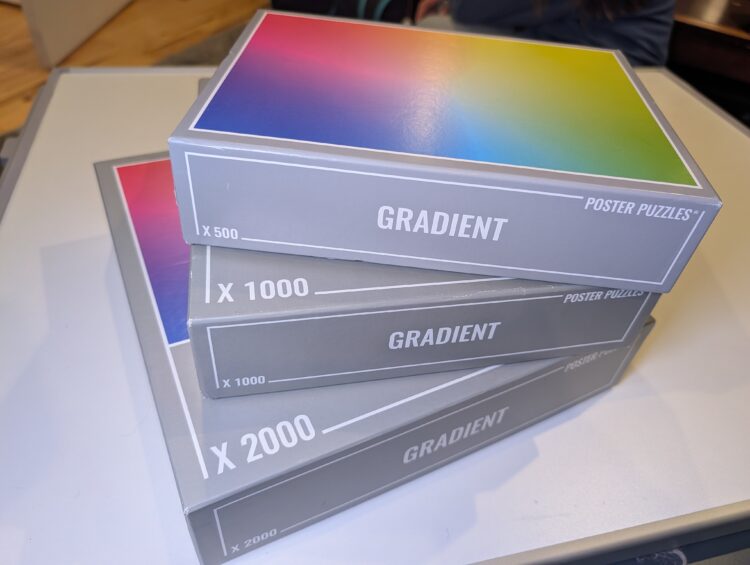
This one was by a puzzle maker named Cloudberries.
Sidenote here – I’m going to introduce you to a handful of puzzle companies in this episode so that I can start referring to them by name, but don’t worry I’ll play a sound whenever I bring up a new puzzle company, and for quickness I’ll just use the extremely recognizable law and order sound for this purpose. [MAKER SOUND]
Then I’ll explain the difference in the puzzles of the ones you need to remember so that later on when I am just referring to them by name only you can still easily picture which puzzle I’m talking about. Also for street cred so that people who are already puzzle people know I know what I’m talking about when I’m talking about puzzles.
– Wait. The Law and Order sound doesn’t sound completely different than my 2 taps sound effect. What if I play them on top of each other? [DO THAT]
I wonder if that sound came about because Dick Wolf, the creator of Law and order does the same thing with puzzles that I do and that dun dun sound came about because he wanted to do the two taps thing after each piece he placed in his TV shows. I mean I’m sort of talking myself into this theory…
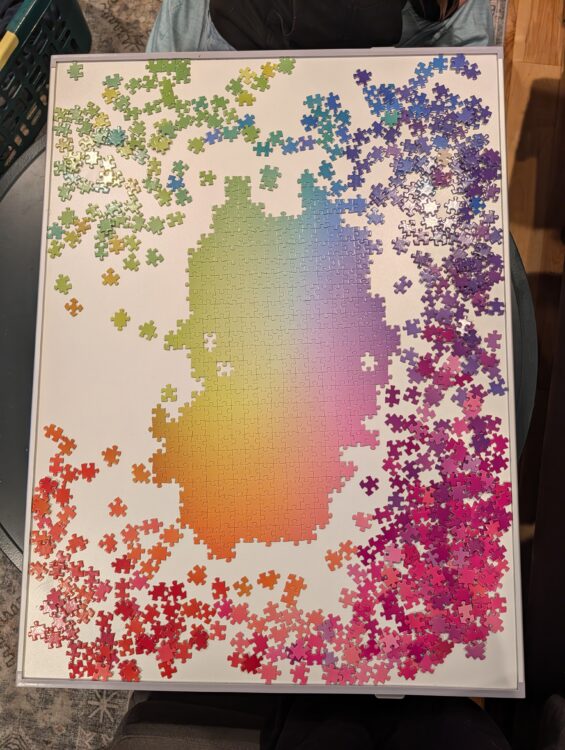
So my first gradient puzzle was made by a company called Cloudberries [MAKER SOUND]. It was 1000 pieces, my usual size, came in a gray box, and I just thought let’s give it a go. Worst that happens is I make no progress, stop having fun, tap out, and walk away having still listened to a bunch of podcasts in my queue. Pretty good as far as downsides go.
And then I ended up finishing it faster than any jigsaw I’ve ever done and probably enjoying it more than any other one too. So what happened? How was my prediction so wrong?
[MUSIC SPACE?] – CHECK
Well, upon actually starting the puzzle, I noticed a couple of things. First, as I mentioned earlier, my regular process had to shift immediately. I realized there was no need to hunt for things in the image, squint at the box lid picture, or even study it at all, really. I knew what the image was and literally never had to check it. That one thing alone made it a completely different experience, and honestly, a pretty refreshing one by comparison.
It began like like any other puzzle in one respect, though, sorting through all the pieces in the box scanning for flat edges, and then separating the edge pieces to start by completing the border. For a gradient puzzle, this establishes the sort of different color poles to work from, like going from red to orange to yellow to green and so on all the way back to red again around the edges.
The way I approach it from there is to select a color I want to start with, or sometimes go with the whitest colors if I want to build out from the center, and then I go through the box of pieces again, not looking for certain shapes like edge pieces. This time I’m hunting for colors. I want to collect the most green pieces I can see – meaning the pieces that appear to me to be the greenest in color, or the bluest ones in the box for example.
In fact I sort of relax my eyes at times when I’m doing this, like you would with a magic eye poster – does anyone know what that is anymore? – but with my vision slightly out of focus, it really does make colors the primary identifier as I stir the box contents like a pastry chef. [SOUNDS OF BOX STIRRING]
Once I’ve done a few passes in the box and feel like I have enough of what I’m looking for, I start sorting within my little collection of pieces for the most white or the most green or whatever it is, comparing them to each other, and then jockeying them into place accordingly.
This is the time in my former jigsaw life that you would have seen me going back and forth from puzzle to box meticulously placing pieces where they belong.
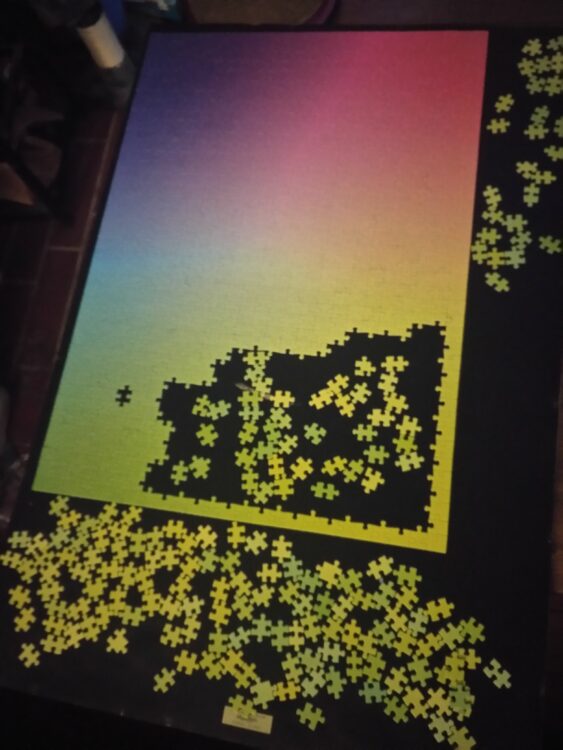
In the harder sections – and for my eyes that seems to be the pinks and the yellows, other people have told me that the hard colors are different for them, but when my progress slows down on one color I can switch to a different one and start hunting for those pieces. Which I did unti I was done. A relatively smooth and frustration-free experience.
Again, all with no need for a box. No squinting down at the lid picture. It puts you into sort of a zone. I think I even hit flow state at times, where I’m finding and placing pieces one after another, and stretches like that are how I wound up finishing this puzzle faster than any other type of puzzle I’ve ever done.
Which again was not at all what I was expecting, so it hit even harder. I had been prepping for a nightmare and wound up with a dream.
The pictures are fun to show people. The reactions are very often ‘that looks like torture.’ And I get to explain to them that it’s really not. And then the finished puzzle. It’s so…pleasant. Calm. Like the opposite of anxiety. It’s very very satisfying. More so than a regular puzzle to me, because you just have this big field of color in front of you that you are staring at.
[MUSIC SPACE – STARTING] – CHECK
It’s a smooth process, it’s a soothing result. It still has all the same satisfying aspects you’d get from completing any jigsaw, but I feel like it delivers them better. More efficiently.
[MUSIC SPACE COTD – DROP OF SOME KIND?] – CHECK
I wait nine and a half months to buy another one. Now of course you might say well then just put the same puzzle back together, since you already have it and after you put it together and take it apart, putting it back together is one of the main things you really can do with a puzzle. But this was still Covid, and I still craved new things from outside, which the first puzzle no longer was, so I got another one, also 1000 pieces, this one was a green to orange linear gradient, and I remember it being a delight as well.
I pick up a few more gradients a couple of years later when I came across a sale, and start to clock the differences in puzzle quality. How some companies have cuts, or piece patterns, with more unique shapes, and some stick to more standard shapes. Differences in cardboard thickness, or with a higher quality printing for the image. Things that result in pieces that just have a better feel in your fingers as you handle them.
This is the point where you start to take note of different puzzle manufacturers,
Then I start buying more of them, but not for me. I spot another sale and pick up some to have as gifts for some puzzle people in my life, or skeptics who I know wouldn’t be likely to buy one themselves.
I collected a few additional boxes for myself as well in the intervening years catching up to this summer. And then I of course, maybe to a concerning degree, used this episode as an excuse to buy a whole bunch more.
[MUSIC SPACE] – CHECK
So my plan this time is to find some other puzzle people, talk to them about gradient puzzles, ask some of them to try one out for me, and hopefully connect with someone who discovers that they, unexpectedly, really enjoy the experience, like I did.
Part of my thinking of how to get others on board for this was to make it a smaller ask. Ask them to do a smaller puzzle. But I only owned puzzles that were a thousand pieces, so I decided it would be a good idea to get a few 500 piecers, and in short order I managed to snap up several on eBay for not all that much. What I didn’t know was that I’d just made a pretty big mistake.
These 500 piece puzzles were all from the same manufacturer Areaware [MAKER SOUND], and they were all different color versions of the same kind of 2 color linear gradient. There was a yellow to green, a yellow to orange, a blue to green, and a pink to purple, but looked like the same puzzle aside from the colors. I figured this would give me a good field to harvest good experiences from.[REPLAY with REVERB from above – ‘what I didn’t know was that I’d just made a pretty big mistake’]
So now I just needed a bunch of other people to give these puzzles to.
(beat)
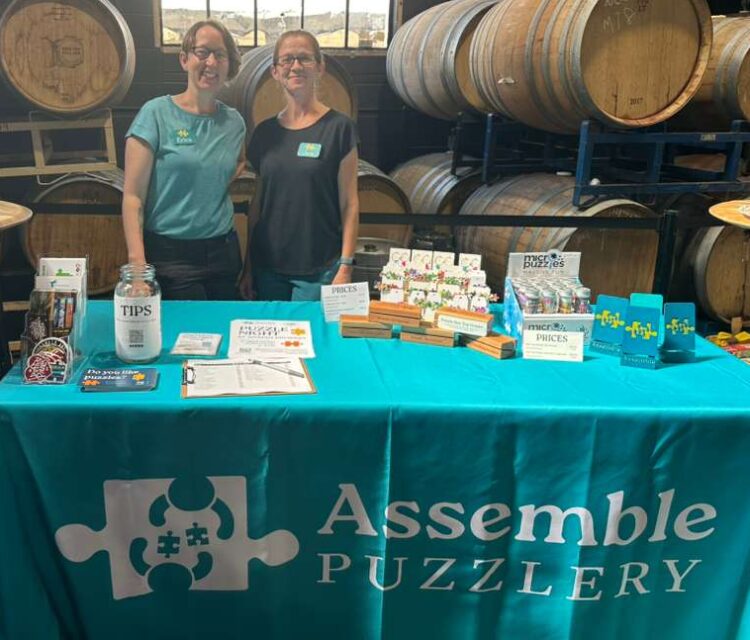
(Ok, ) Here’s a puzzle. If you’re a solo puzzler like myself, where do you even find another puzzle person? What about several other puzzle people? Are there puzzle clubs? What kind of puzzle-infrastructure already exists to connect me to other people who like to puzzle near me? How do I tap into the Puzzle Matrix? Well, I did some poking around, joined a few Facebook groups, and ended up connecting with two women who created a business to answer those questions and more.
(37:58)
Jen: My name’s Jen Thompson and with Erica here I have co-founded Assemble Puzzlery, longtime puzzle fan / just something we like to get started to bring it out to more people. (Sweet). /
Erica: I’m Erica Elms and Jen and I were friends first and then she approached me with this idea and also a puzzle fan. Love doing them with family and friends.
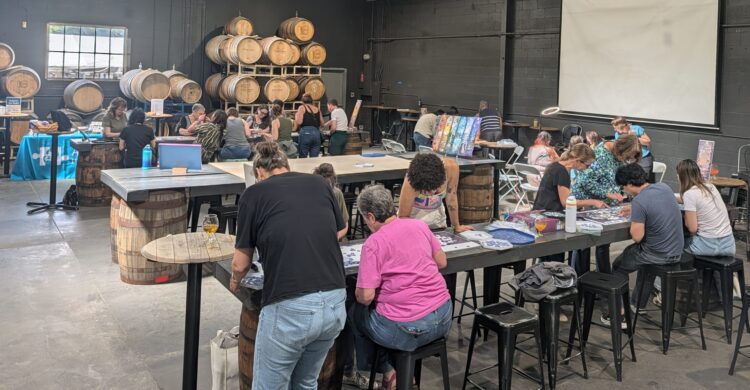
Jen Thompson and Erica Elms have built a community of puzzle people by putting on regular puzzle-based events of all types here in the Bay Area of California, on the East Bay side around Berkeley, Oakland, and Emeryville as Assemble Puzzlery.
Now, what are puzzle-based events, you might ask? Which would be reasonable because I had the same question.
(38:38)
JEN: the purpose behind what we’re doing is trying to kind of facilitate and provide opportunities for people to build and strengthen their connections with each other through an activity which is doing puzzles.
(38:57)
/ puzzles have been a great activity for people to convene together and and have fun doing but also like actually spend time with each other, like real meaningful time./ it’s kind of a similar idea to getting together to play games, but what’s a little different about puzzles is when you’re playing a game like a board game, your brain has to really be thinking about that game, right? The strategy
(39:26)
what movie you’re doing, et cetera. Whereas when you’re doing a puzzle, it’s much easier to like let your hands and your eyes of course are doing the puzzle, but your brain can also have a conversation at the same time. Like you can be, you know, kind of doing more things at once./
(39:44)
ERICA: Yeah. Yeah. They’re almost meditative, I think. Yeah. JEN: And a lot of people who like puzzles do them at home alone, [which is fine. I think there’s a lot of benefit and value to doing that too.] But we’ve received a lot of feedback from people about how surprised they are sometimes and how fun it is to get together in a public place and hang out with other people who also really like doing puzzles and you know just doing them together.
(40:11)
To be honest, I think most of the people who’ve showed up to our events on a regular basis, they’re pretty intense puzzlers. They do a lot of puzzles. And I know there’s more people out there though who who do puzzles, but maybe not as frequently.
(40:24)
we do get a mix, you know, we get some people who just kind of happen upon us like, this is a really cool idea and they’ll either stop that day or they’ll come to the next event. but yeah, we’re we’re hoping to engage I mean puzzles appeal to such a wide variety of people, right? Of all ages, of all different skill abilities, of all races and social classes and all of that. So that’s something that we really enjoyed seeing is the variety of people that show up at our events.
Our conversation gradually shifted to talking about gradients, of course, and I asked if they had any experience with them
(44:58)
Jen: I have seen them. Okay. I have never done one. Okay. It’s probably one that I would say no thank you to.
(46:51)
Erica: I enjoy gradient parts of puzzles. Okay. Like I enjoy when, you know, the sky is lighter on one side and darker on the other and I like finding
(47:20)
the gradient of it and like like you said, like what’s the lightest blue and what’s the darkest blue and I’ll kind of spread those out and then I’ll find what’s in the middle and put it in the middle and then sort of piece it together from there. So I I do look at this box and think, ugh. But it seems it seems if I think about things that I actually enjoy doing inside of a puzzle, this is partly it.
Which I would maybe call a luke-warm or luke-cold reception to the idea. Side note – I should develop a show about a cool private eye solving snow-based crimes called ‘Luke Cold.’ – anyway
I also checked to see if these self-described puzzle fans have their own unconscious habits or rituals with puzzles like I do when I tap the pieces in. [TAP TAP]
(44:15)
JEN: I was thinking about this the other day when I finished a puzzle and I’ve seen so many people do the same thing. They get that last piece in and then they like put their hands down on it and like rub their hands over the surface of it, like and feel it. And I do the same thing almost every time too, and I realized it when I started seeing people do it at the events, like, that’s funny and then I realized, I do that too. It’s like this
(44:44)
What do you think is behind? Satisfying like, it’s done and then you’re like feeling it, you know, like that tangible process of like feeling it being complete. Mm-hmm. so yeah, that’s that’s one thing I do.
I thanked Jen and Erica for sitting down with me and I left each of them with a 1000 piece full gradient for later and one of the Areaware 500 piece linear gradients to try out for this quest. Each took a different color, to test out and report back on.
(49:30)
/I’m looking forward to trying it now more than I thought I would after hearing your description. Hopefully I made it less daunting and and more of a and you might you might get
(49:49)
you’re ten minutes into this and go, Scott lied to me directly to my face. This this horrible person. How would how dare he? But maybe he’ll be like, you know what? I I I can I can feel it.
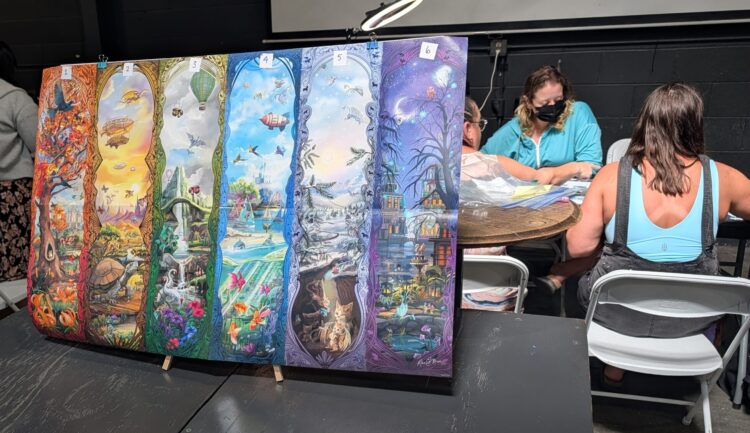
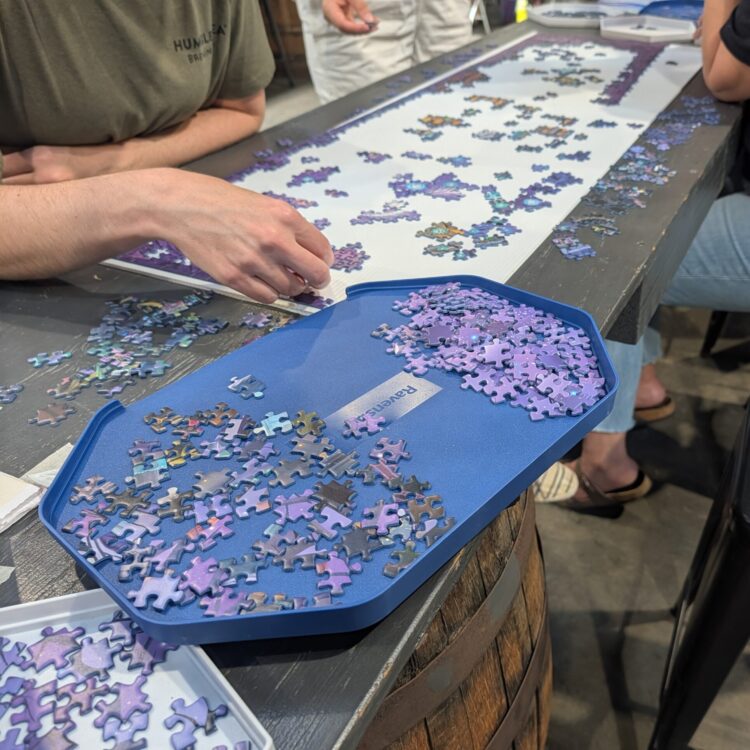
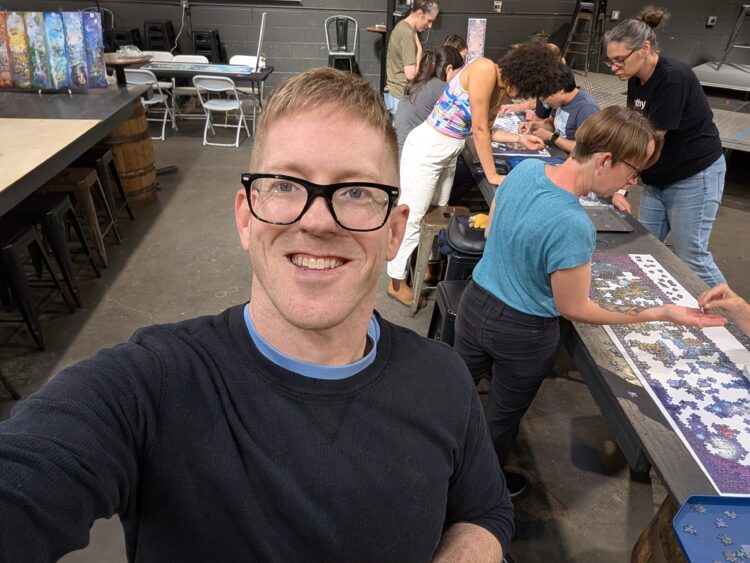
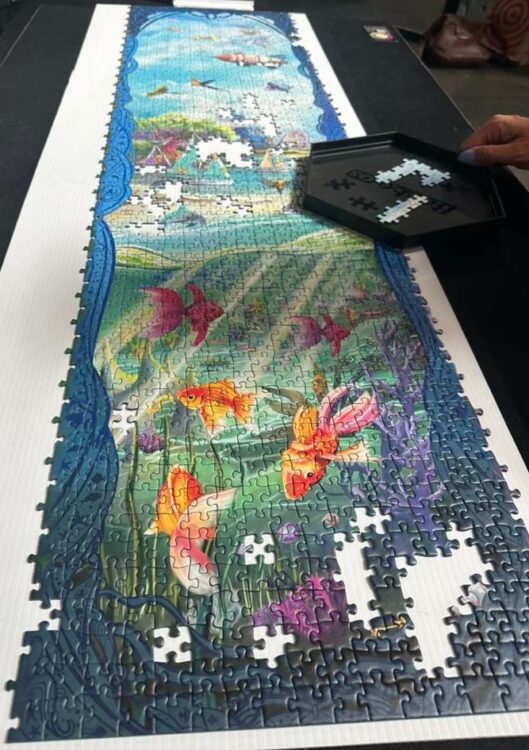
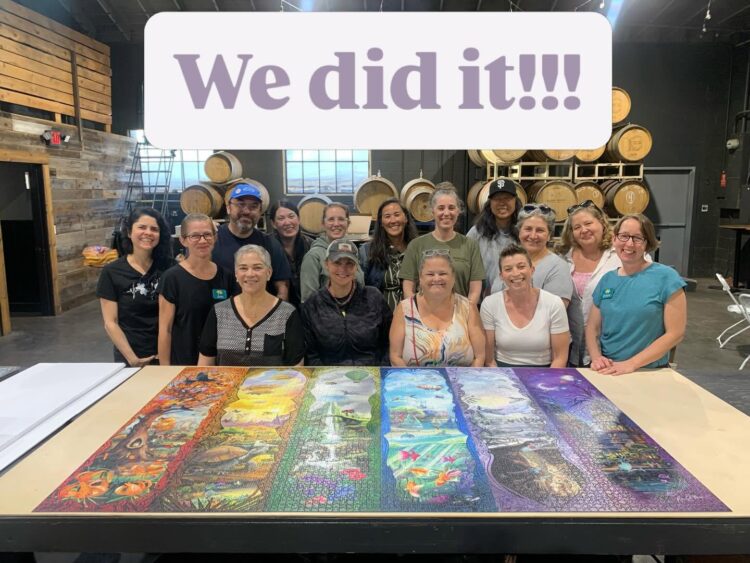
I made a plan to reconnect with Jen and Erica at the next Assemble Puzzlery event, which was a community effort where everyone would be working together to build a 7000 piece jigsaw puzzle by Ravensburger [MAKER SOUND] called ‘The Six Portals.’ One puzzle with 7000 pieces. Buhhhhh.
There were groups at 6 different stations each working on different sections of this behemoth to connect at the end for the complete image. And multiple tables meant multiple chances to find puzzlers for my quest, but it also meant multiple introductions.
(15:18)
so I’m my name’s Scot, I’m making a podcast about gradient.
(15:32)
puzzles that’s why talking to people. That’s how I found myself at a simple puzzlery to talk to just ’cause I find it so relaxing.
(13:56)
Most people don’t like Gradients. (Yava)
If someone wasn’t interested in talking or gradient puzzles I would move on, trying my same questions here and there in different places seeing where I might find the best fit:
(22:34)
Have you guys tried a gradient puzzle before? No. Is that a thing that seems like it would be interesting or seems like no thank you very much it would not be interesting? it seems like it’d be interesting. It feels like it would be a challenge like this is a challenge.
(22:51)
Kind of like the whimsy of the whimsy of not having to like a function picture. You think this is fun? Good job. Sorry. I mean if it was just a color, I don’t know what it would be more blue. It’s not just one color. It’s more than one color. It’s sometimes it’s all the colors. Yeah, all the rainbow.
Selfie at the Six Portals buildAnd this was the first person at the event who was interested in gradient puzzles, so I pulled her aside to find out more.
(19:49)
My eyes are really good on telling the difference in colors. Yeah, so thank you for I love it. Volunteer that we were talking about this. So can I get your full can I get your name? Sarah Busing.
Sarah was working over in the purple section of the 7000 piece puzzle.
(20:18)
I love gradients. are yeah. And it’s one reason I’m not really good at speed puzzling is because I’m really good finding the individual pieces that go in, but at speed puzzling you have to be a little faster. You’re trying to brew with that. Exactly. Exactly. And for me it’s a case of where is
(21:05)
that one color. So I I think I’m on the same page as you where it’s like I’d rather it maybe take a little longer, but the elegance of pick a piece, put it directly in. And it’s per and you’re just like yeah. Exactly. That’s the that’s the bolt. Yes. So this somehow goes in there.
The blue portal nearly complete
Sarah was clearly already very much on the same page as me…
I do a lot of puzzles on my iPad
(21:35)
two because like I don’t have thousands of puzzles. And I’ll always choose the ones with like scars or the gradients. Because I know. that’s this one. And I had one Charlie Parker puzzle recently, blue on top, no gradient. I didn’t finish it. It wasn’t worth it. I don’t really want to sit there and go, which like little nibble does this go on? That’s no interest to me at all. So yeah.
(22:05)
So I just I love gradient puzzles. (sarah)
Sarah wasn’t going to be a first-timer but clearly loved gradient puzzles already so she looked in the big bag of puzzles I brought with me and took home one she hadn’t done before to put together and report back on, a 1000 piece Areaware [DUN DUN?] linear gradient, twice as many pieces as the 500s I was trying to push on newbies, but Sarah was well versed in gradients so this seemed like a better fit. [WHAT I DIDN’T KNOW WAS I MADE A MISTAKE LINE]
At the station for the white portal of the six portals puzzle I connected with Brian, who also was also already well acquainted with gradient puzzles.
(23:31)
my father and I love puzzles. We do them all together all the time, but he’s much more like he’s staring at the picture looking for the piece and where it goes. I like being able to just grab a bunch of pieces and find out where they go. So it’s very satisfying for me to be like, okay these are the reddest pieces. Let’s put them and put the red section, start building the red section. You find the red like slightly lesser and slightly less red. And then it like builds across, you know.
(25:45)
And it’s sort of like you’re drawing two sides if you’re going from like left to right or whatever. Very satisfying. Yeah, it’s very satisfying in that way.
And I think one last aspect is I do end up focusing on shape a lot when I do puzzles. Shape of the pieces. So you’ll get like this row of like the the green layer that you’re working on and you’re like do you find the shade of green that’s like very very indistinct from each other but then that’s a sudden you focus on the details of the pieces so you’re just sort of like ooh I need like one that has a slightly longer arm here or one that has like a really big
(26:45)
in piece so you’re looking for that little those little shape details in between like the so it’s sort of a you just want to grab the right colors and then you look for the details
Brian was pretty well versed, but I managed to have one in my big bag of puzzles that he hadn’t done yet, so I sent brian with a 1000 piece puzzle – a full gradient by the maker Blue Kazoo [DUN DUN] that I had just gotten for this episode and done a few days before and I had been pretty loud singing its praises.
As well as lending out puzzles and talking about gradients, I also remembered the reason we were there in the first place.
I buzzed around a bit from table to table, both looking for ways to chip in, and trying to stay out the more serious puzzlers’ way. I made sure to contribute as well. I happen to know that I was responsible for exactly (because I counted) 10 of those 7000 pieces being put into place. That’s a total of twenty taps [PLAY TAPPING SOUND] or (zero point) 0.142 of a percent of the puzzle. So, you’re welcome.
(Beat)
Along with the puzzles to Sarah and Brian, I sent one with really interesting shapes for its 631 pieces called the Krypt cut [DUN DUN] home with Vicki, and found more takers for my Areaware 500 piece puzzles including Norah, Who also filled me in on some bad news about my new favorite gradient puzzle:
(18:13)
I just got and did this one this week. Nice. And it was delightful. Yes. It was nice. They are sadly out of business now. What? Blue Kazoo. Why? Went out of business. I mean not why, I guess I understand. That’s sad. They make a very enjoyable puzzle. Mm-hmm. Yeah.
Thanks to everyone who I talked to at this event, I started to understand a bit more about the thing that I had bit off and was currently chewing. I also had a lot of fun just chatting and putting together a puzzle with strangers for the first time.
[MUSIC SPACE] – CHECK
Some things surprised me about the event, though the first one I should have expected, really, but when talking with people there – unlike when talking with the people in my normal life – I rarely got to be the first person to show them a gradient puzzle, or to suggest the idea of doing one for fun.
I mean these are puzzle people. I’m just starting to wade into waters that most of them have been swimming in for years. I start saying something I think is novel and they finish my thought when I pause or they say something that matches almost word for word what I had written about thoughts on the topic.
The other surprise was that even though many different members of Assemble Puzzlery had already heard of gradient puzzles, it seemed like most of them started from the same place:
(17:48)
NORAH: gradients are really fun. Okay. I really love these things. Yeah. And so I’m trying to kind of So does Karen puzzles evangelize. So does who? Karen Puzzles. I do not know she’s a youtuber youtuber. Okay. She is like the most famous puzzler YouTuber. Okay. Chip top puzzle YouTuber. Okay. (Norah)
(24:03)
BRIAN: It was actually because of Karen puzzles on YouTube. Okay. (Brian – and Vicki “me too!”)
(29:31)
I started doing speed puzzling also because of Karen Puzzles (Vicki)
(00:42.656)
Hi Everyone I’m Karen, This is Karen Puzzles.

So Karen Puzzles is a channel, a persona, and sort of an evangelist for jigsaw puzzles on YouTube.I went and found her afterward because of the gradient connection and also because it seems like her videos have a real effect on people.
(28:41)
So it sort of star like I’ve been doing puzzles my whole life with my family, but it’s always been like a family thing. I’ve never really done puzzles by myself. Okay. Until I found Karen puzzles on YouTube. And then Karen Puzzles on YouTube led to me being like, well I g yeah, why can’t I just do puzzles by myself? And I started just doing puzzles by myself. (brian)
Karen does indeed do a great job of showing off different puzzles and kinds of puzzles, including multiple videos about gradient puzzles. She seems to love them just like I do as I was hearing her say some of the same things I’ve been saying. I was about to stop watching because I didn’t want to unintentionally copy her thoughts when I came across one of her videos titled ‘The Only Puzzle I Couldn’t Finish?! – Areaware Gradient Jigsaw Puzzles Review’ and it’s all about those puzzles I passed out to Jen and Erica, and all the people at their event.
It starts out very normally:
I can finally confirm that it is finally the day for my Areaware Gradient Jigsaw Puzzle Review.
But then even before the 2 minute mark you hear
So AreaWare is a site that stocks a big variety of trendy home decor items. One of their products that they sell are these gradient puzzles.
Okay, so puzzles aren’t the main thing Areaware does but they took a chance and decided to make some to sell with their other lines of home furnishings.
(00:42.656)
So, okay, I think these puzzles make beautiful home decor items, conversation starters. They’re just gorgeous objects to hold. But
I have a few issues with them as jigsaw puzzles.
Oh no that’s not good.
I did find some things that I don’t really love about them. And spoiler alert, I actually didn’t even manage to finish one of them that I was filming for this video.
Karen gets into more detail but the gradients are not spread out across the whole puzzle leaving large stretches of near solid colors that sort of defeat the purpose of choosing this type of puzzle in the first place,
—
To me, that’s just not fun having to use a brute force method and just try piece after piece and not really feel like you’re moving forward.
‘brute forcing’ a puzzle is where you slowly and surely try every piece in every place and every permutation, usually by organizing the remaining possible pieces in a grid and then going through them one by one. This means you will always find your piece eventually just by process of elimination, but it also may be the last one you try with no rhyme or reason. It feels like less of a strategy solution and more like one born out of desperation.
just find that so frustrating and so tedious. So, and I literally like never do this, especially not with the puzzles I’m filming.
But I decided to just give up and take it apart before I had finished the puzzle.
(03:16.17)
So when I looked more closely at all of the boxes, I realized that pretty much all of the colored puzzles have this same issue.
and she also pointed out how pieces are so similar in shape that you pick up a lot of the false fits ( where you get a piece all the way in even and then may have to pry it out later when you discover it’s not the right one for that spot.)
there were a lot of points where I thought a piece fit into place, but it didn’t actually go there.
So that is a major issue that I had with this puzzle, but it is definitely more difficult than other gradient puzzles I’ve done.
Well shoot. This feels like the flipside of my first experience where I was aiming for a nice easy experience and ended up with the opposite, one that was needlessly hard.
I’ve literally never had this happen before. I had to take a very close look at the rest of the puzzle to find the piece that was in the wrong spot. If a piece can be
Completely surrounded and still look right? I just cannot believe that. To me, that is the mark of a very lazy puzzle cut,
—-
So, when it comes to gradient puzzles, if you’re new to them, I wouldn’t necessarily recommend starting with the area wear ones, since they are definitely more of a challenge.
—-
And then remember this: [REPLAY with REVERB from above – ‘what I didn’t know was that I’d just made a pretty big mistake’] ? Well so THIS is the point at which I realized my mistake. I had given out multiple copies of the one type of gradient puzzle that even puzzle-lover Karen Puzzles didn’t like, because they provided a slow and frustrating ‘brute force’ puzzle experience because the gradient doesn’t cover the puzzle right, and with a ton of false fits because it was made by people who don’t normally make puzzles, and I had used THOSE as my argument for this type of puzzle experience. This was not how to build trust around this thing that might be hard for people to like already.
and now the initial responses from Erica and Jen made much much more sense.
[WORDS FROM JEN/ERICA AT THE 7000 BUILD]
(08:49)
Okay. Alright, so getting feedback from Erica first. And you said you’ve tried you started trying to I started it. My I started it because my daughter pulled it out. She it’s it’s the gradient is pink to blue. Okay. and she was really excited about the pink. And then she helped with the border and then she hasn’t touched it since.

(09:12)
So I started with the blue thinking she was gonna help me with the pink and the blue is like two th it’s like a full third of the puzzle and it’s all very similar. Yes. And it’s been really slow going and a little bit painful if I’m being honest.
Animation of the 1000 piece Areaware build
(09:30)
There’s a lot of bits that are really, really close. Okay. And ’cause it’s the same color. You can’t be sure until Yeah, until I get like the whole row in. So I feel like I haven’t even reached the gradient yet. Okay. So I don’t have a whole lot of feedback on. I feel like I’m doing a blue puzzle at the moment. And it’s making me a little blue.. Like I’m waiting for it to get better because the blue is just starting to lighten up.
(10:26)
So I think I may have set you up with some less than ideal testing graphs. Well I will say that I do want to try a different one. Okay. Yeah I’m going to finish it up but I do want to try another one. I don’t want this to be my only experience.
(11:10)
Jen, could I turn my mic to you and ask you how it’s going? Have you tried and what is the experience so far? I did. So I tried this blue to teal colored one because I love these colors. Okay. This also looks I’m worried that it might have been too blue. But what did what did you experience?
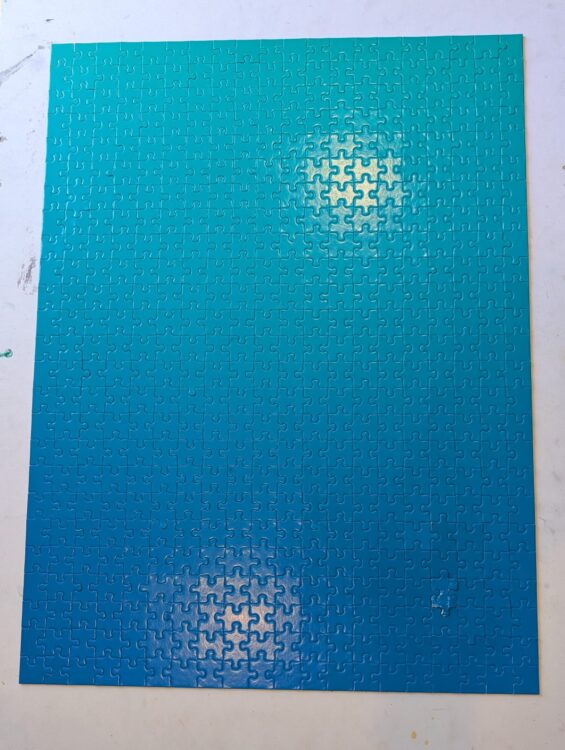
(11:31)
I I couldn’t do it. Okay. To be honest. So I I truly after talking to you last time, I truly was excited to try it. And I did, like right away that same night I think. But I couldn’t even get the edges together. I there was I same thing that Erica described, there were a lot of false fits. Yeah. And I just got too frustrated with it.
(11:55)
So too many false fits. I have to tell you, like, it takes a lot to make me stop a puzzle. Like I’m one of those people who I can’t walk away from it. I’ve done a lot of really tough puzzles and even though I’m like hating it, I still finish it. Yeah. This was a different one. I couldn’t do it this time. I couldn’t. Interesting. Okay But I will say it wasn’t
(12:14)
I could see maybe a different cut, a gradient puzzle with a different cut, that I I would enjoy it. But because the cut the pieces were so similarly shaped and I just over and over like I I tried to do as much of the edges as I could and I tried to then kind of continue from there and do the next row. Yep. And this I found the same thing again and I was like, okay, I’m done. Fair couldn’t do it anyway. Totally fair. Thank you so much for trying, Jen. I appreciate it. and sorry again that it wasn’t. you don’t need to apologize. I’m glad I tried it.
Looking through the box after Jen said that I discovered that even among these 500 piece Areaware puzzles there are 2 kinds, and some have the full variety of shapes you would find in any standard puzzle but a couple of them, and Jen you had one of these, must have been an even earlier run of these puzzles where apart from the edge every single piece is the same – standard puzzle piece shape. The one you’d imagine first if someone say picture a puzzle piece. No variety whatsoever. huchhh.
I quickly dashed off several emails, first apologizing to Erica and Jen who I had already impacted, and then to try to stop the other people I sent them home with, too. I managed to catch Norah in time before she used it on a livestream that could have turned bad, but Sarah who had the 1000 piece version was a bit too quick for me.
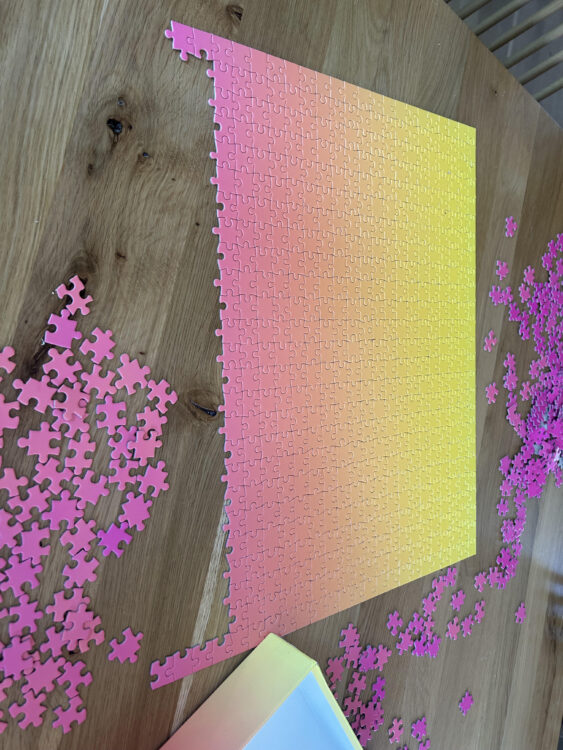
Before I could email her I got a picture of the puzzle half finished and this message:
Hi! I got halfway done pretty easily.
But I am gonna stop now.
I realize I liked gradient in smaller bits. As either as background or in 500 piece puzzles.
Sarah! Who LOVED gradients was tapping out of this puzzle, just like Karen Puzzles had, and Erica, and Jen. I totally oversold and underdelivered as it relates to my quest.
I mean not only was I not getting new people on board with me, I’m actually turning someone who loved gradients off of one a little. Guh.
Sorry, Sarah, if you’re listening. I didn’t mean to, I promise.
So with the linear gradients crashing down in flames around me, I realized this experiment would have to come down to the full gradients I had passed out instead. Because what’s the only thing to do when the piece you were just sure was going to fit your needs ends up not even being the right piece at all? Set it back down and try another one instead.
[MUSIC SPACE?] CHECK
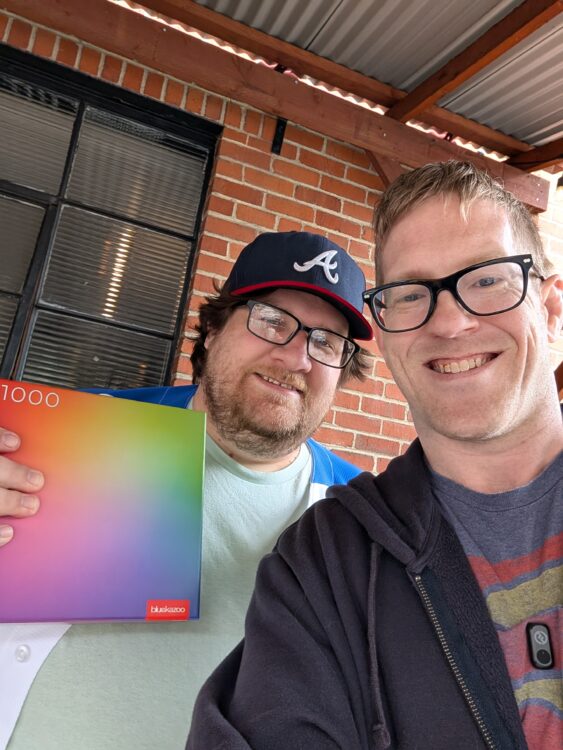
First I circled back to talk with Brian from the Assemble Puzzlery event again, (this time with a proper introduction):
(01:09:57)
my name is Brian Earle. I’m from Alameda, California, and I fell in love with puzzles when I was a kid because my dad made them fun for me.
(01:06:31)
Brian, you the blue kazoo puzzle.
from the top though, first I’ve never done a blue kazoo puzzle. Okay. I would do one again for sure. Peace quality, very good.
(01:06:58)
Peace quality is very important. I think the piece quality on Blue Kazoo was very good. Yeah. this particular gradient puzzle I think was amazing. I had a great time. it definitely sort of lends you to starting with the brighter colors. That’s not always the case. So I definitely started up in like green and work my way across to red and then down into the purple and blue. You you’re saying it led you to do that. What do you feel like how do you think it’s what just like you throw all the pieces on the table. Yeah. And you just
(01:07:25)
let your eye catch something and you’re like, the green is standing out so much to be right now, I’m gonna start with the green corner. Interesting. Start filling in from the green. And then you know, as you’re sort of or pulling out green pieces, you’re also organizing the other pieces a little bit. And I was sorta lumping purple and blue in one pile ’cause it was pretty dark. Right. So it was tougher to tell the difference, espe like in the dark the subtle tones between the purple and the blue. Yeah. So I was definitely separating like green and red and orange and sort of working through that. How did I just ask you quite
—
(01:08:36)
. I have to say I I agree with you that you’re talking about the flow. And I think this kind of gradient puzzle is perfect for that. Cause if you just sort of let your eyes pick the color, just like let your eyes fall fall on the color
(01:09:05)
That’s the color you’re gonna work on then. It just sort of flows around the puzzle that way. Where you just let your eyes follow the colors and you’re like, and then suddenly it’s getting coming together really quickly. I also feel like that it burnt like the colors kind of like getting used to a smell or something where you don’t smell it anymore. That’s very true. Or like a color you’re you’re wo looking at, you’re like, I can’t
(01:09:27)
I it’s all the same color now. And I’ll get up and walk away and do something. I’ll like d empty the dishwasher or something. And then I’ll be walking past the table. And I’m like, well obviously it’s that one. That’s the that’s the lightest one. I think that’s so true. That’s very true.
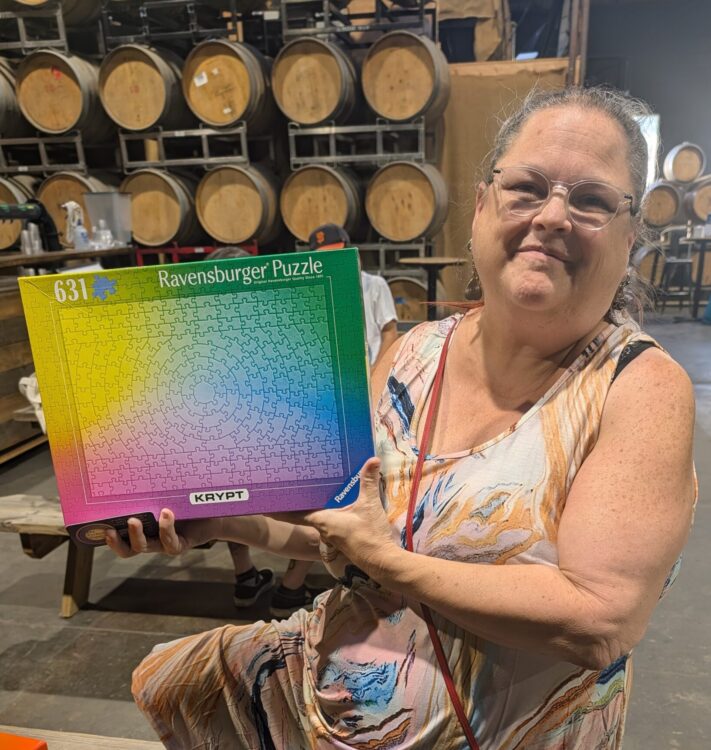
Then Vicki, who took the 631 piece Ravensburger Krypt Puzzle, and we sat down outside on a day when it was a little windy, which you’ll hear from time to time.
hi, I’m Vicki Davis and I live in Berkeley and I love doing puzzles. Awesome.
(57:44)
, this puzzle was It was so much more fun than I expected it to be
(59:13)
remind me. Have you is this have you done gradient puzzles before? This is the first This is my first gradient puzzle. wow, this is perfect. Yeah, and I completed it in two hours and 45 minutes. Woo! And so I wasn’t speeding through it either. I mean, you know, I was like conscious that I was timing myself, but not trying to go super fast. And I would say a 500-piece puzzle normally takes me at least three and a half hours.
(59:42)
And then sometimes like four to five if it’s a harder image. And so I was expecting this to be one of those really long saws. Okay but it went really quickly and I really enjoyed it. And it’s six hundred and thirty-one, so it’s more than a typical five hundred piece puzzle for me. so yeah, so I I really liked it.
(01:00:06)
I have the box sort of sitting in the distance on a a holder, you know, so I could glance up at it, but you know, I didn’t really need to reference it much because you could just kind of see how the puzzle goes. It just merges itself and I’m the kind of person who doesn’t typically
(01:00:36)
Like even puzzles where you don’t know the picture, like mystery puzzles, because that’s so hard for me to not have the picture and know what I’m building. But in this one, again, because it’s a gradient, I didn’t really have to reference the picture, I could just know instinctually what pieces came next. This is more or less saturated, this is more or less. Exactly. Exactly. And so, you know, sometimes too on like busier puzzles, like doing a sky, people will be like, I like the sky because it’s a great.
(01:01:06)
And for me, like I’ve never been able to discern that subtle gradient with you know like a light blue to a a slightly darker light blue. Right. But this was a very distinct gradient what that went to distinct colors and where they merged was like almost its own color as well. so it was very easy for me to to yeah to do it. So I think that yeah, that’s is this a
And so this puzzle I found very satisfying. Nice. And I was like proud of myself. I was like wow I did it in under three hours and
(01:03:29)
And I really had fun and I never got frustrated and I never felt stuck. Yeah. You know? so I’m curious to see if it was purely because of the gradient or how much the piece cut influenced that. you know,
Vicki was hitting the things I had hoped to have someone hit by doing this experiment, and seemed to be fully enjoying it. She was so game, in fact, that I asked if she’d be up for a round 2, and she accepted. This time a 1000 piece full gradient made by a company called MasterPieces [DUN DUN]
—
(01:04:38)
I wish you luck. I hope it it I jet we just did it and it was a truly fun great experience and I’m I’m very happy with it. So I I’m I feel I feel pleased now I feel sheepish that I’ve given bad experiences to others. I feel totally confident with this one like I like I did with the crypt. So you’re gonna be I think you’re gonna be two for two. That’s great. At least I have one success story here. Yes totally
(01:05:04)
thank you for joining and thanks for doing puzzles with me and for for the show and appreciate it so much. Thank you. Thank you.
By this point in the process I had now bought and done enough of these that I had developed preferences and my favorite 2 in this process were the Blue Kazoo one that Brian did, and this MasterPieces puzzle that I just gave to Vicki.
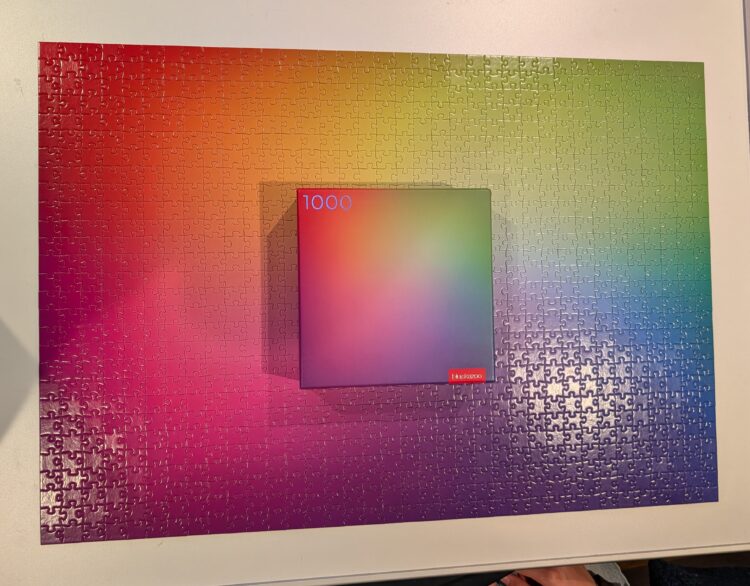
And let me go deep on gradient puzzle brands for a moment. The Blue Kazoo puzzle has a good but very standard piece cut, and the best piece quality, and most vibrant colors on the image of all the puzzles I tried during this. The picture when put together is the most vibrant of all my gradient puzzles by far. But they are also out of business as a company so it’s a bit harder to come across these. I lucked out because I got mine on eBay very cheap
The MasterPieces puzzle has a much more unusual piece cut, where it’s less of a grid and more like how bricks overlap each other with seams in the middle of the bricks above and below. It also was readily available at a completely reasonable price through their own website or target or I found it on Amazon and eBay as well. A bunch of places, really, but sold by the company itself, so the prices were all pretty much identical, but under $20, which seems very reasonable to get a new puzzle shipped to you like this.
So a while later I reconnected with Vicki to see how she fared with her larger go. This time in a much less windy place
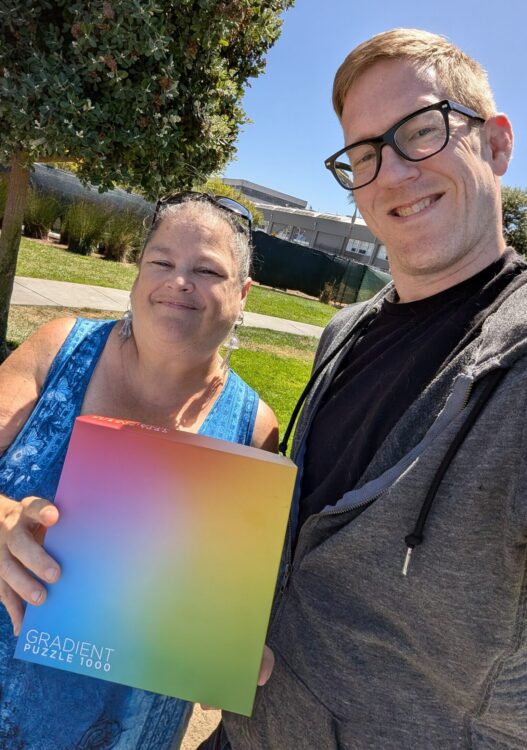
(01:12:35)
Back talking with Vicky Davis after the one thousand piece gradient from the MasterPieces one,
(01:13:20)
. I was a little intimidated that it was a thousand pieces, but I was feeling confident after doing the six hundred and thirty-one piece Ravensburger puzzle. Cool. And you know, so I went into it very open minded and excited, and I ended up doing the edge and I would say a third.
(01:13:48)
Okay. Of the outside section of the puzzle in about two hours. And it was super cool and super fast and I was having a great time. Okay. And then I got to like the middle section. And my God, it was a slump. It was so hard.
(01:14:04)
And I would sit there for like twenty minutes and be like, What is the next piece to put in? Because on this one the middle section is white. The middle section is like almost white.
(01:14:30)
When I was doing it, I started putting the pieces on top of the puzzle that I had completed to try to figure out where does this go. And then even and I when I cause normally when I do a puzzle, I I try to if I have the room, I lay out all the pieces. Okay. And with a thousand piece puzzle, it’s hard to do that in the beginning. But I was at the point now where I had done at least a third of the pieces that I had room to lay them out. But it was so hard even then to color sort.
(01:14:58)
Because it was such a subtle difference between the colors that at that point I from the distance from my eyes to the table, I couldn’t tell the subtlety of the difference of the colors. And so I would have to put the pieces on the puzzle and kind of move it around and be like, where does this really go? you know, to try to put it together and sort a little bit. And it took me so long.
(01:15:46)
right after shortly after this, I went to the opposite extreme and did a very, very busy puzzle with like hundreds of people and little items and lots of busyness so I could see tiny little drawings. Just intricate.
(01:16:01)
Like exactly and just kind of do the opposite. My brain needed to do something very busy. And I relied a hundred percent, you know, on the image and hunting and pecking and seeing, can I find this person’s head? And this person’s here. That’s where that piece goes. And it’s kind of funny because when you look at the pictures of me doing that puzzle, there’s just, you know, a hundred pieces randomly sitting in the center, but they’re all appropriate.
(01:16:27)
approximately where they’re supposed to go. Sure. Even if they’re not connected to anything yet. Where when you look at the images of the gradient, I it’s literally like you’re doing it in order. And it’s you can kind of just see it’s almost you can go line by line almost. Yeah, yeah. When you’re following the gradient, you wouldn’t necessarily do little islands or sections. And it’s a very different way of doing a puzzle. at least for me, because even on a a puzzle with bigger images,
(01:16:54)
I might do, there’s a dog over here. Let me do this dog or let me do this tree or let me work on the bridge. And there’ll be little islands within the puzzle of sections I’ve worked on. But with the gradient, you don’t do that. You literally are building out like piece by piece as the color fades. so it’s very different. T
So I’d say Vicki would give this experience a passing grade, but not with flying colors. Like maybe a B- or C+, but enough that I think the seed may be planted.
Speaking of which, I took a trip this summer, and even though puzzles didn’t come with me, they kind of did because I was always talking about working on this episode and I ended up acting as a bit of a ‘Johnny Puzzleseed’ at a few places where I stayed, leaving behind future deliveries of the MasterPieces gradients that I really enjoyed, as a function of it being so available and affordable, and asking if they could report back any thoughts later in return.
I sent one to my friend Ben and his family in Minnesota, and another to Kansas for my friends Josiah and Peggy.
-also Peggy makes the best vegan breakfast burrito I have ever had, maybe best breakfast burrito I’ve had period. Just outstanding.
[MUSIC SPACE?]CHECK
After my trip the summer was just about over, but not until my daughter helped me finish a few more puzzles for this episode,
CLIPS OF AMELIA AND ME PUZZLING
hey, I’m Amelia Moppin and I’m from Tiny Tens episode and probably some others that I forgot.
(34:41)
OR
(55:47)
Hey, welcome back to the pot Amelia. Thank you for putting on a microphone again today
My daughter was also a major force of puzzling around me this entire summer as I’ve been figuring out and making this episode. Or maybe we’ve been influencing each other back and forth. I’ve had dozens of puzzles out over the past few months as I’ve worked through and on many different angles of the idea. She has been working on them with me along the way and I didn’t know this until recently but she’s been keeping track of her stats, the puzzles she’s completed and how many pieces they have. And she’s been on a streak doing puzzles.
CLIPS OF AMELIA AND ME PUZZLING
Now you kept saying addicting. It is very You kept going It’s because Yeah.
(51:51)
You kept being like, my gosh, it’s addicting and you kept like spending tons and tons of time. It’s because I was like reading my book and doing all that, but then I like, I need I wanna finish this chapter so I can keep doing on the puzzle. And then when I would start doing the puzzle I’m like, Okay, in like two more pieces. Then I get them done really fast, I’m like, two more and then I just keep doing that and then eventually just like got through half of it and then three quarters and then yeah.
We decided to finish the summer with a 2000 piece gradient puzzle that’s the biggest one either one of us have put together to date. A puzzle that would push her grand total of puzzle pieces put together this summer just past 15,000, pretty amazing.
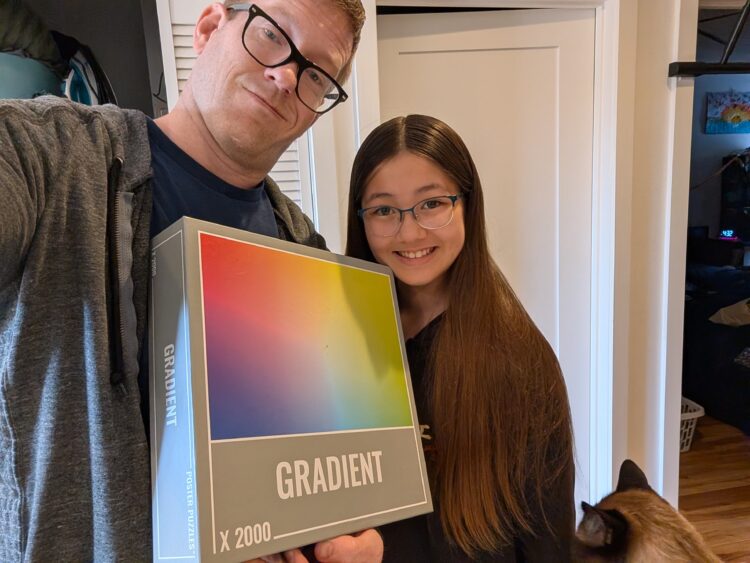
(53:34)
And also this vouchers for gradient puzzles. The first thing I did on my summer vacation was I came home and I started the gradient puzzle and I finished it that day, I believe. Yeah. That was your first act of summer vacation. First act of summer freedom was sit down and jigsaw. Yep. That was amazing. So you’re describing something that could be unpleasant. If you couldn’t like you’re like it’s pulling me in, I can’t, like I have to keep spending more time.
(54:03)
Is it unpleasant or is it No. It’s very fun. Okay. Although I will admit, it might be a bit annoying when you have actual stuff to do because I had absolutely nothing to do because of my summer vacation, so I can just sit here for the entire day and work on this and I don’t feel like I’m ever like losing time on anything. But when you watch me procrastinate by doing puzzles instead of work or something. But yeah, but also like I can imagine like if it was still a school day and I had homework, I’d have to do the homework while seeing this next to me and be like
(54:32)
I want to do it so badly but I can’t do it and then if I start doing it I won’t get my homework done and then that can be a problem. Big time.
And this is one of the most wonderful things that really came out of this summer of puzzles for me. I ended up being the parent who had puzzles out all the time, where my kid could walk by whenever and just jump in and work on them
(35:52)
Now, I wanna point something out. Yeah. Today was the last day of school. Correct. And we came home, and this is literally the first thing you did with your summer vacation is sit down into a puzzle. Actually, the first thing I did with my summer vacation was eat a piece of chocolate. Okay. But then I did puzzle yet. But that’s a that speaks highly of it, right? Yeah. That speaks highly of the enjoyment factor. Also just the fact that it was just like
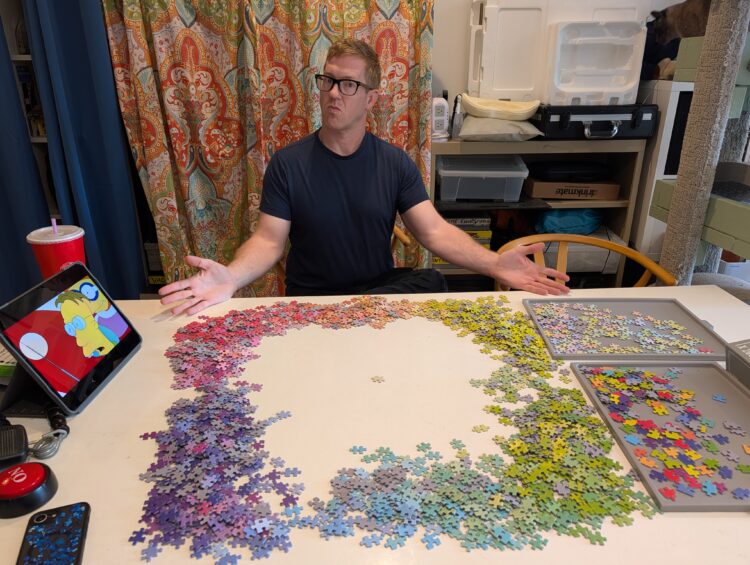
(36:19)
out on the table makes it much easier to do because like if I’m like I have nothing to do, I’m like, well this is here on the table. That’s what I’ve been doing. I’ve been buzzing by all day, putting in like one piece here, one piece there.
And I realized that -fingers crossed- I may have created another link in this chain. A love for puzzles that was a big part of my mom, which I picked up as a child, and then as a parent myself, I passed on to my daughter.
~ (57:13)
If there’s ever a gradient puzzle on the table, I will get it done by the end of the day. It’s sort of irresistible. Yep. Is that fair? Mm-hmm. Okay. Especially during a summer break
Look. All I do is this, and then one of them’s gonna be so much more yellow than any of the other ones. They’ll just stick in. I have an idea which one it which one it is. Which one is it? Nope. Hang on. Watch this.
(35:17)
I bet it’s one of them under the couch. I bet there’s one under the couch? I don’t know. We dropped the entire bin, remember? crap. If it is, we wouldn’t know.
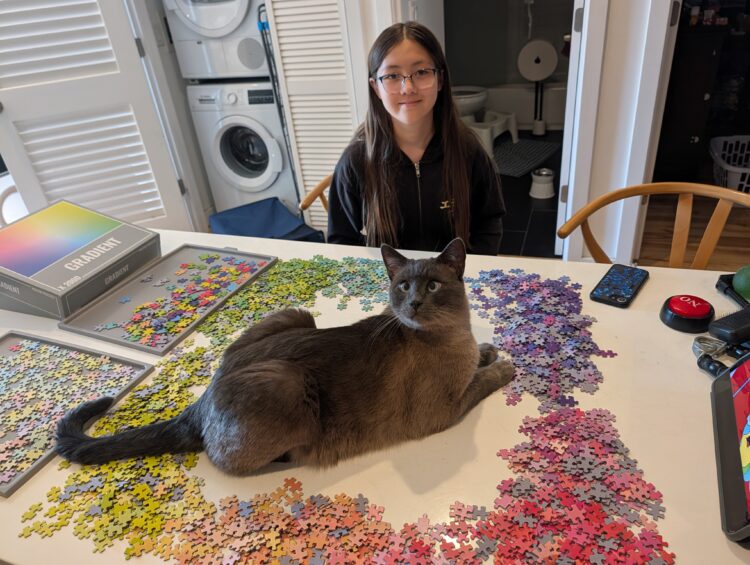
(35:31)
I trusted you to get all the ones from under there. I thought I did. Okay, well, I don’t see it. Then we’ll look for it later.
This summer started for her doing a 500 piece gradient puzzle on the first day, and a 2000 on the last day of it, with dozens of others in between. For me it started with an idea for really a mini episode of this podcast and turned into a summer-long quest that clarified what I like about puzzling, and what I want to get out of it.
I also did some other puzzles during this quest, the regular kind, and experienced the old version for me of hunting for details on a box lid. And every time I kept being reminded that really, for me, the only kind of puzzles I want to do are these thousand piece full gradient puzzles, specifically to get that experience I know I love every time. The relaxing meditation of organizing a box full of chaos into its proper order.
And those puzzles truly do that the best for me. Delivering the most satisfaction with the least frustration, which of course isn’t going to be true for everyone. People come in all different shapes – (puzzle piece reference). But then there probably are others out there like me for whom this experience represents the best that puzzles have to offer, and wouldn’t have given it a chance on their own without a little push.
I’m very happy when those people discover that it was totally different than they were expecting and represents a new experience that puzzling has to offer them.
[music space]

And about those 500 piece puzzles that I gave everyone embarrassingly, Karen Puzzles had a few more things to say about them in her video I mentioned above.
(05:17.296)
Now that I’m done actually putting it together, I cannot be more excited to look at it as an art piece. I think this puzzle looks beautiful, it’s such a gorgeous idea and it’s almost like an art piece./ Since all five of them are the same cut, I also took this opportunity to mix up the colors a bit.And get a few more fun photos out of them..
And my daughter had noticed this, too, so we built them one more time. She and I brute-forced the ones with the same piece and no variety, false fits and all. Amelia then remixed them into a few different designs, with pretty chunky wide stripes being the ultimate winner of ideas.
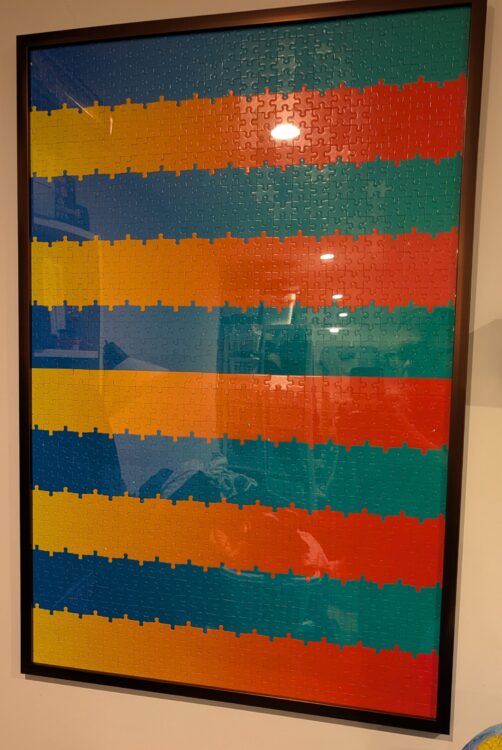
I did have some major issues with them as puzzles, but as art pieces and home decor and conversation starters, I think that’s where they really shine. But if you’re willing,
To make a few concessions just to have like a different, beautiful item in your home, then these are so beautiful.
—-
(00:52.656)
And I think they are just gorgeous pieces of home decor.
That’s good because I got a frame the right size for both of these remixed puzzles, and hung the frame on the wall above my puzzle shelf, which, yes, is a thing I now have after making this episode.
Hopefully at least the two that I framed won’t be taken apart or allowed to vex any other nice people for a very, very long time.
[music space]CHECK
And then right at the end of the summer I heard from Peggy in Kansas again, sending me pictures of the completed MasterPieces puzzle with screenshots of some texts from her mom, and I knew I had to get them both on a call.
Lois Lervold (00:18.606)
So I’m Lois Lairvold, I’m Peggy’s mom.
Hi, I’m Peggy.-
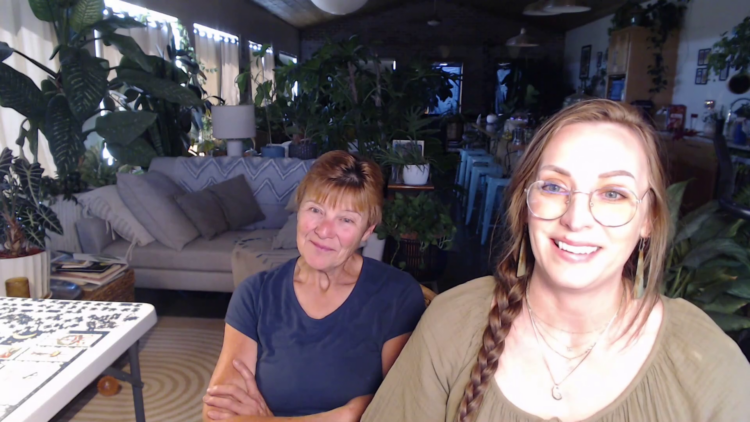
Hi, hi, Lois. I’m Scott. nice to meet you.
(00:11.438)
–
Scot (00:24.056)
Peggy, after I visited, I sent you a gradient puzzle, which arrived probably a few days later. And then what was your experience with that?
Peggy (PJ) Lervold (00:32.568)
Yeah. Well, we talked about puzzles quite a bit when you visited because I have them just strewn about my house on shelves and whatever. So we got talking puzzles. Then you told me about gradient, which I hadn’t really even heard of. So you sent me one. It we opened it and stared at it for a while because I I was a little bit intimidated. I hadn’t done anything like that before. Wasn’t sure if I was gonna like it.
–
yeah I liked it a lot.
my thought as I was doing it was it was almost more like painting than puzzling because it just kind of flowed. and I also thought it really made me think of the phrase hunt and peck in terms of regular puzzling. So like a regular puzzle, you have to hunt and peck like on a keyboard. But the gradient was more like a quirty keyboard where you just, you know, you just flow. and the word flow is what I kept thinking of over and over when I was doing it. You could get into like a yeah, a cadence of just bam, bam, bam, just the pieces were just dropping.
yeah, I really loved it. I thought it was really fun and relaxing. It was quite a different experience than like a typical puzzle. there almost needs to be two different words for it because it was so different. but yeah, I really enjoyed it. I thought it was an absolute blast and I would definitely do it again.
Scot (02:08.396)
So Lois, I sent this to PJ, so I know how that came about, but how did you go about getting the puzzle? What what did you and what did you initially think about it?
Lois Lervold (02:19.786)
W gosh. I I don’t know how I ended up with it. I guess I’ve
Peggy (PJ) Lervold (02:24.174)
I snuck it over to her house and then I just left it.
Lois Lervold (02:26.996)
even home. I thought, my just came home. There’s this beautiful thing here sitting here. I thought, she I’m ready, I’m ready. So she warned me about it, but I just loved it. It just you kind of train your mind to do other things. You really focus on the variant of the color instead of you pick up this one piece and then you have to find it on the box and figure out which what position it goes. It wasn’t any of that. And it went a lot faster than I thought. It just took up you know it took probably several hours still but
I just couldn’t quit.
Peggy (PJ) Lervold (02:58.188)
You got into it. Tell me what you texted me about how you weren’t gonna be able to go to bed until you finished it. She did. She texted me and she said, I’m not gonna be able to go to bed until I finish.
Scot (03:51.745)
now that I’ve done a gradient puzzle, it’s like really mind opening how much time you do spend consulting and kind of, you know, going in and out and getting the correct light. You don’t get that that flow scenario where you’re just
putting the pieces in and not having to consult.
When I finally finished it, it was beautiful to look at. I took a bunch of pictures of it. I thought it was like really gorgeous to to do it and then also to look at it when it was done. So yeah.
Scot (04:53.91)
Awesome. Lois, how about you? What did you think?
Lois Lervold (05:01.154)
Well you I’m I’m old and I’ve done so many of those stupid Thomas Kincaid type things, you know. I’m so sick of those. Sick, sick, sick of them. So Peggy, bless your heart’s been gifting me with all these really fun different ones. But the one you you gave us was really, really the first one of like that I’ve ever done. And you’re right, that the comparing and the worrying about the colors, that that gets old. yeah. This was just the flow. I like the word flow. I think
Peggy (PJ) Lervold (05:29.582)
It was just fun. Yeah, it was really fun. Good deal. Yeah.
Scot (05:33.334)
Lois, had you ever seen a puzzle like this before? Or would this have been a thing you’d have been interested in if you had come across it like
Lois Lervold (05:39.532)
Wouldn’t have thought so. I wouldn’t have thought so. It’s ’cause I was trained to that, you know, it’s always the mountainside or the castle. Something, something. I never would have picked that. If I would have gone to the store I never would have. But boy, I’m glad I got to play with that. That was really
Peggy (PJ) Lervold (05:53.834)
Very fun.
Scot (07:21.102)
Do you see yourselves doing any more gradient puzzles in the future?
Peggy (PJ) Lervold (07:25.474)
Yeah, I would definitely do another gradient puzzle. Yeah, I would, wouldn’t you? god, yeah. Yeah, we would definitely do another one. If you care to send us another puzzle, we’ll do it. He comes out of like the the bathroom or something with a puzzle.
Scot (07:34.432)
Just a second, hold on.
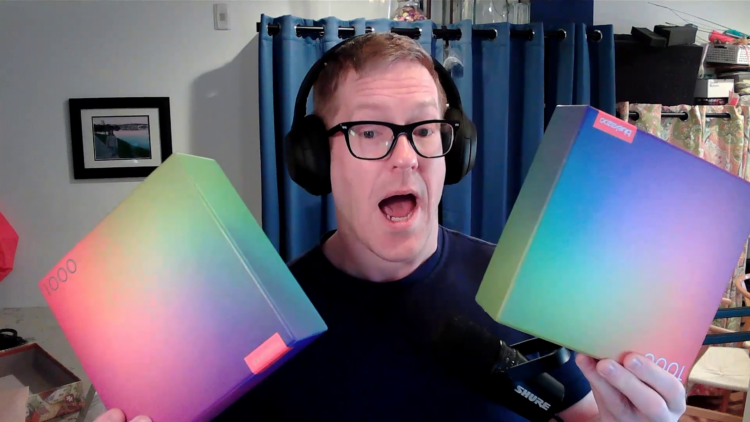
Peggy said that because I had just walked out of frame on the video call. Then I came back holding the Blue Kazoo puzzle just off camera, which also has I’d say the nicest box quality of the puzzles in my puzzle collection.
This thing is very nicely saturated. I enjoyed this. And this is the one which is the classic six shapes or whatever, you know, like the classic grid one. So it gives you that experience. But very pleasing, very nice. And through the course of eBay I ended up with two of them.
Peggy (PJ) Lervold (08:41.589)
Wow, wow, wow.
Scot (08:42.824)
I am absolutely planning on giving one of these out your direction and seeing and letting you do this one too. Because also this was my other favorite one
—
And this is the least I could do to to h to get to further your maybe budding addiction into the gradient puzzle space like that I am in.
—
thank you all for sitting with me and thank you for joining me for the show.
Peggy (PJ) Lervold (09:53.602)
Yeah.
Lois Lervold (09:54.166)
understand why you and Josiah are good friends. I just think you’re delightful.
Scot (09:58.415)
All Lois, thank you for being with me today. Peggy, thank you for being with me on the show. My pleasure. Yeah. Really appreciate it.
Peggy (PJ) Lervold (10:02.85)
Yeah. Absolutely.
So then a very short time later…
(01:20:03)
Would this be how I wrapped the parcel?
Peggy and her mom were perfect. I’d say that was probably an A+ with Lois. Pretty much everything I could have hoped for.
(01:20:33)
It’s looking good. They’re gonna like this package.
(01:20:49)
All right, so we’ll mail this out and then they should get the puzzle in power on. Mm-hmm. All right, let’s do it.
…and the very day it arrived Peggy texted me:
“I didn’t even get to open your package. My mom was over for coffee and took off with it lol.”
Followed by a little over a day later, when a new text from Peggy arrived along with a photo of the completed Blue Kazoo puzzle, beautiful as ever – it really is the nicest looking one – and a note from Lois about how much fun it was, and with Peggy joking that Lois might need an intervention.
Johnny Puzzleseed strikes again.
[Music Space]
There was one more late event that happened during the making of this episode. (and I apologize in advance for the shift that – has to happen now.)
Sandra Maupin passed away on the night of September 14, 2026. She leaves behind countless lives she affected and improved through her teaching and her friendship, three beautiful grandkids, her incredible loving husband, an amazing daughter, and one podcaster who called her Mom.
She will be very dearly missed.
Her love of puzzles was only one of a million different qualities of who she was and what made her so special. One that I will try to pass on to my daughter.
Parent to child. Child to parent. The chain gets longer piece by piece.
So there we go. The last bit of this story. [TAP TAP SOUND]
[music space]
And with that, Gradient puzzles, Jigsaws with no lines or picture, just colors shifting into each other, become the next entry into the perfectorium, the index of perfect things.
I’ll allow all of them in except the Areaware ones, but I’ve made no secret here that my two favorite gradient puzzles are the one by Blue Kazoo – which had the best colors and best box, and the one by MasterPieces – which had a fun unusual piece cut and good piece quality as well as being the easiest to get combined with the best price to make it very ownable and very giftable. I think I bought 5 of them this summer haha.
You can see all the entries to the Perfectorium, including this one, at the direct link for it, perfectshowpodcast.com/perfectorium (spell it out)
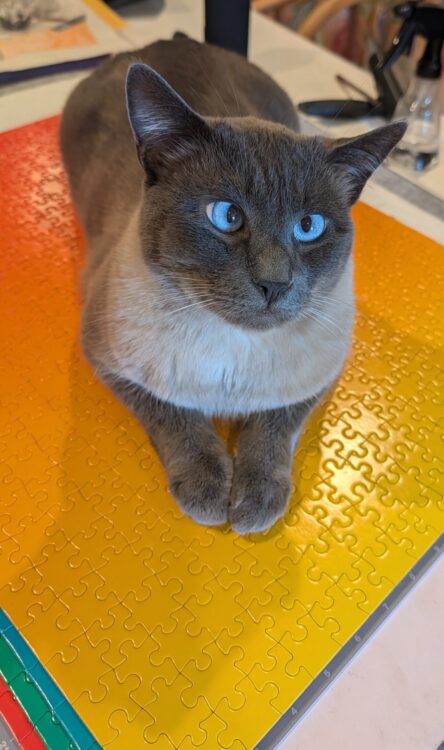
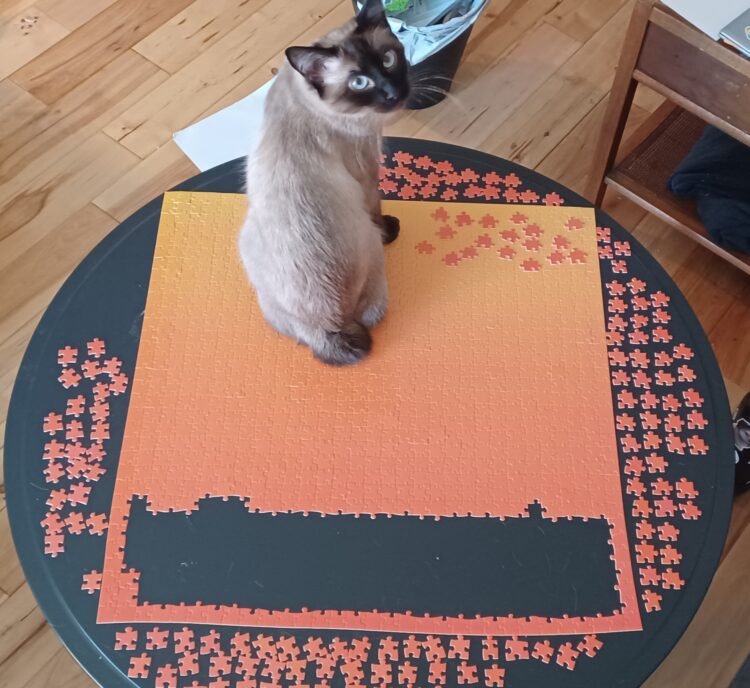
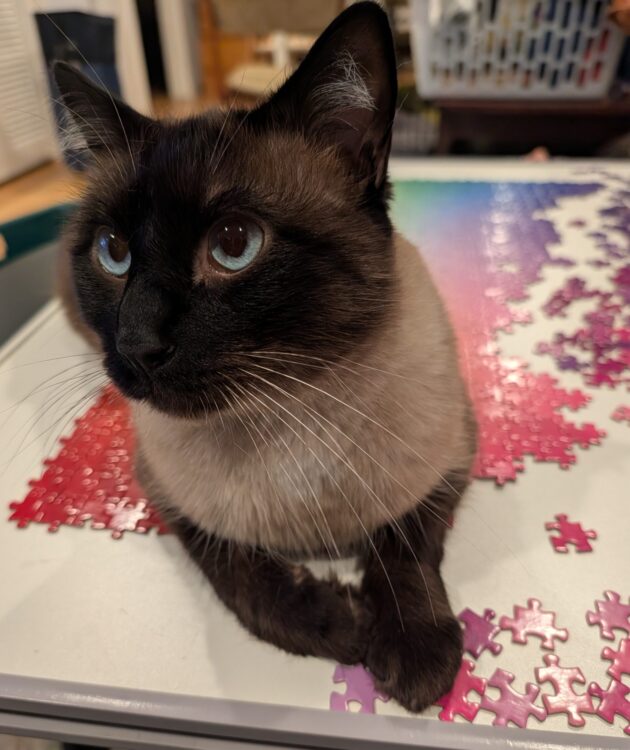
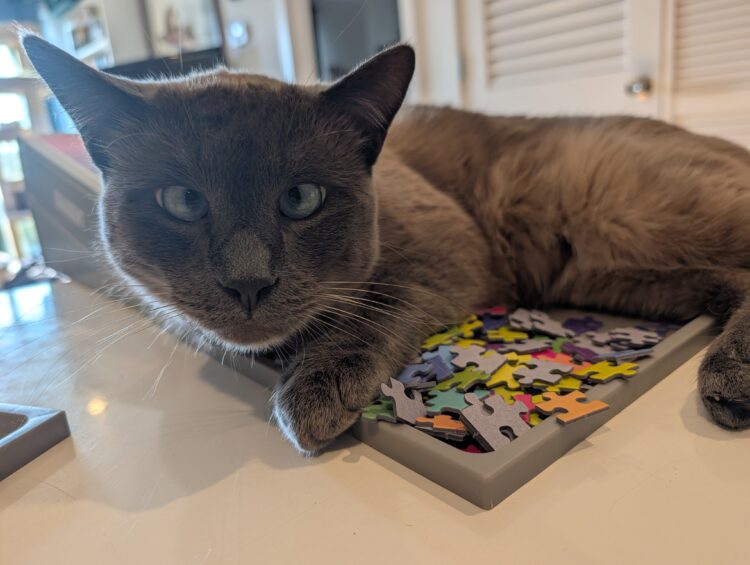
Go to the show’s website perfectshowpodcast.com to see pictures and videos related to each episode. This time I’ll have lots of progress pictures of the different gradient puzzles I’ve put together over the summer, which might sound boring, but my photos often include my cat Pixie who seems to be running an operating system that requires him to sit in the middle of as many puzzles I’m working on as he can.
I’ll also include photos and details of all the puzzles in my gradient puzzle collection with a short blurb for each. If you have or like a gradient puzzle I haven’t talked about here, check the webpage to see if I have it in my collection and just didn’t get to talk about it in this episode, because there are 6 or more puzzles that I didn’t even get to mention here or it would have been twice as long.
You can also see pics of the final resting place for 2 of the areaware gradient puzzles now hanging up above the puzzle shelf.
And photos and videos from my guests who sent me progress updates and even a great timelapse Vicki made of her putting together the Krypt (ACCURATE?)
And if you’re on a podcast website looking at pictures of gradient puzzles put together by other people, I’m gonna go out on a ledge and say you might be the type of person who should just get one and try it out yourself.
Thank you to Assemble Puzzlery – you can find them on Facebook or at their website assemblepuzzlery.com, which will also be linked in the notes. Thank you to all the puzzlers who helped out, Brian, Vicki, Ben’s family, PJ and Lois, (Deb?) and also a special thank you-slash-sorry to the people I wrapped up in my bad puzzle plans – Erica, Jen, Sarah, and Norah. I really appreciate what each one of you contributed for this quest that ended up having so many pieces. I could not have put them together into this without you all.
You can find the info and links for all the musical artists in the show notes and on this episode’s webpage.
If now or in the future you find a gradient puzzle I don’t have or didn’t exist when I recorded this and want to contact the show, I’d love to hear about it. You can email PerfectShowShow@gmail.com, and find me on any socials I’m on just at my name, scotmaupin. That’s Scot with one t and M-a-u-p-i-n.
This is my – let’s face it: semi-anual request at this point to rate, review, and subscribe to the podcast.
The show comes out whenever with no rhyme or reason so subscribing is the easiest and maybe only way to know when a new one comes out.
 I’ve also been leaving reviews each episode for other shows to model a great way to support podcasts you listen to, one that doesn’t cost anything other than a sliver of your precious and irreplaceable time.
Today is a little bit different in that I’m going to talk about another show but not leave a review myself, and that’s because the podcast I’m going to talk about is another podcast I’m on called Solutions From the Multiverse. This is a podcast my cohost Adam Braus and I have been making for a few years, and we just made a push to make it a weekly show, with video on YouTube. Which is a lot, but we’re pulling it off.
It’s also a fun show where Adam comes on mic each week with a new idea to improve the world or society in some way, and I don’t know what it’s going to be but we hash it out and talk about the problem that it would address, and why the idea would be a good solution.
It seems a bit gauche to give my own show a review so I’m not doing that this time, but if someone else wanted to drop it 5 stars to make up for me not being able to, I’d happily accept the assist.
Or even better yet if you just want to go over to Solutions and check out what we’re doing, it just may be your cup of tea.
This episode was recorded and mixed at Milky Way Studios in Oakland, CA.
(beat)
And the thing I’d ask you to remember for this episode is to spend time with your mother when you can, and tell her you love her.
Love you, Mom.
So, until next time, I’m Scot Maupin, and thanks for listening to The Perfect Show.
[Outro music – 50 eggs]